6 min read | Published on: August 7, 2026

|
Quick Answer Glass keeps food fresh longer than plastic because it is non-porous — no odor absorption, no chemical interaction with food, no micro-scratches that harbor bacteria. The right container size matters as much as the material. Excess headspace means excess oxygen, which speeds up spoilage even in a sealed container. These 15 ideas are organized by food category — fridge, freezer, pantry, and meal prep — with the specific Razab container size that fits each one. |
The container is the variable most people do not control. The food is fresh when it goes in. The recipe is right. But three days later, the leftovers taste flat, the cut fruit is oxidized, and the meal prepped chicken has an off-note. In most cases, the container caused it — wrong size, wrong material, wrong seal. These 15 glass food storage ideas fix the most common storage mistakes, with the specific container size that produces the best result for each food.

Fridge Storage Ideas — 5 Foods That Last Twice as Long in Glass
|
1. Store Cut Vegetables in the Right Size Glass Container Cut vegetables stored in an 800ml glass container with the lid fully sealed last 5 to 7 days. The same vegetables in an open bowl or loosely covered container last 2 to 3 days. Glass does not absorb the volatile compounds that make cut vegetables smell refrigerator-stale, and the snap-lock lid prevents moisture loss that turns vegetables limp. Container: 800ml (27oz) for most cut vegetables. 1200ml (40.5oz) for large batches of broccoli, cauliflower, or mixed greens. Freshness gain: Cut vegetables last 5 to 7 days in sealed glass vs 2 to 3 days loosely covered. |

|
2. Keep Cut Fruit From Oxidizing Cut apples, pears, and avocado brown because oxygen triggers enzymatic browning — the same reaction that makes bananas go dark. A glass container sealed airtight significantly slows this. A 370ml container with a squeeze of lemon juice and a sealed lid keeps cut apple slices bright for 3 days instead of 3 hours. Container: 370ml (12.5oz) for single servings of cut fruit. 640ml (22oz) for larger batches. Freshness gain: Cut apple slices last 3 days sealed in glass with lemon juice vs 3 to 4 hours uncovered. |

|
3. Store Leftover Soup and Stew Without Flavor Transfer Plastic containers absorb the smell and color of strongly-flavored soups — tomato, curry, lentil — and transfer those flavors to the next food stored in the same container. Glass is non-porous and does not retain these compounds. A 1520ml container holds a family serving of soup with 75 percent fill headspace for safe sealing. Container: 1520ml (52oz) for 4-serving soup portions. 2700ml (91oz) for large batch storage. Freshness gain: Soup and stew stay fresh 4 days in sealed glass with no flavor transfer to the container. |

|
4. Marinate Proteins in the Same Container You Store Them In A glass container used for marinating chicken on Sunday becomes the storage container for the same chicken after cooking — no transfer needed. Glass handles the acid in marinades (lemon, vinegar, wine) without absorbing the flavors into the container walls. Plastic containers show visible staining from acidic marinades within a few uses. Container: 1520ml (52oz) for 4 chicken pieces with marinade. 2700ml (91oz) for a whole chicken or large protein batch. Freshness gain: Marinade-to-storage in one glass container eliminates one transfer and one extra container to wash. |

|
5. Store Cooked Grains With Minimal Headspace Cooked rice, quinoa, and pasta dry out in the fridge when stored in an oversized container — the excess air above the grain pulls moisture out of it. Match the container size to the cooked volume: 2 cups cooked rice fills an 800ml container correctly, leaving minimal headspace. The result is grain that reheats with the same texture as day one. Container: 800ml (27oz) for 2 cups cooked grain. 1200ml (40.5oz) for larger batches. Freshness gain: Grain stored in correctly-sized glass reheats with better texture through day 5 vs drying out by day 3 in an oversized container. |

Freezer Storage Ideas — 5 Foods That Freeze Better in Glass
|
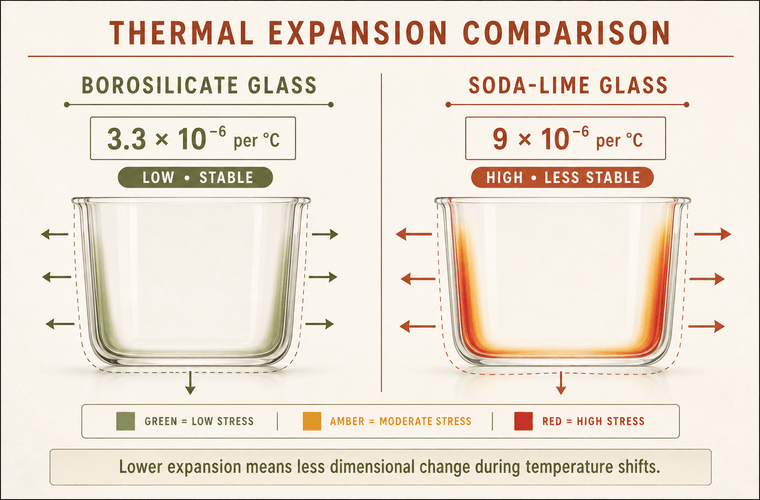
6. Freeze Soups and Stews Directly in the Serving Container Borosilicate glass handles the freezer-to-microwave transfer without cracking — meaning the same 1520ml container that holds the soup in the freezer is the container it reheats in. No thawing into a separate pot. No transfer to a microwave-safe dish. Fill to 75 percent maximum to leave expansion room for liquids. Container: 1520ml (52oz) at 75% fill for family soup portions. 800ml (27oz) for individual portions. Freshness gain: Freezer-to-microwave in one glass container saves one pot and one transfer at every meal. |

|
7. Store Batch-Cooked Proteins in Freezer-Ready Portions Cooking a large batch of chicken, ground beef, or salmon and freezing individual portions in 800ml containers means each meal portion is frozen in its correct serving size. Pull one container, thaw overnight in the fridge, reheat in the same glass. The food never touched plastic at any stage. Container: 800ml (27oz) for single-serve protein portions. 1520ml (52oz) for two-person portions. Freshness gain: Batch-frozen proteins in portion-sized glass containers eliminate all mid-week cooking decisions. |

|
8. Freeze Overnight Oats for the Full Month Overnight oats made on Sunday can be frozen in 640ml containers and thawed one at a time in the fridge overnight. A batch of 10 frozen overnight oat jars takes 20 minutes to assemble and covers 2 weeks of breakfast with zero weeknight effort. Glass freezes and thaws without the plastic odor that appears in frozen plastic containers after multiple freeze-thaw cycles. Container: 640ml (22oz) for one overnight oat portion — perfect size for a full serving with toppings. Freshness gain: Frozen overnight oats last 3 months in sealed glass vs fresh shelf life of 5 days refrigerated. |

|
9. Store Baby Food in Small Glass Portions Glass is the preferred material for baby food storage — it does not leach plasticizers, does not absorb colors or flavors from pureed vegetables, and goes from freezer to warming bowl without transfer. 150ml containers hold a single baby food serving. Freeze directly after pureeing. Container: 150ml (5oz) for single baby food portions. 320ml (10.8oz) for toddler portions. Freshness gain: Homemade baby food frozen in glass lasts 3 months with no material transfer risk. |

|
10. Freeze Baked Goods in Serving-Size Portions Muffins, individual slices of banana bread, and cookie portions freeze better in glass than in plastic bags because glass maintains a consistent internal temperature during freezing — no frost formation on the food surface that happens when plastic bags allow slight temperature variation. One muffin per 370ml container, one loaf slice per 640ml container. Container: 370ml (12.5oz) for one muffin or brownie. 640ml (22oz) for one slice of loaf cake or banana bread. Freshness gain: Baked goods frozen in sealed glass stay freezer-burn-free for 3 months. |

Pantry and Dry Storage Ideas — 5 Foods That Store Better in Glass
|
11. Store Overnight Oats Dry Ingredients Together Pre-portioning oat mix in a container — oats, chia seeds, and protein powder already measured — means assembling overnight oats takes 30 seconds instead of 3 minutes. A 640ml container holds one pre-measured dry oat portion. Add liquid and refrigerate. The dry ingredients stay fresh in glass for 3 months with no moisture absorption. Container: 640ml (22oz) for one dry overnight oat portion set. 1520ml (52oz) for a weekly batch of dry oat mix. Freshness gain: Pre-portioned dry oat mix in glass stays fresh 3 months vs 6 to 8 weeks in original packaging. |

|
12. Store Nuts and Seeds to Prevent Rancidity Nuts and seeds contain natural oils that oxidize when exposed to light and air — the mechanism behind the stale, bitter taste of old nuts. A sealed glass container in a cool pantry extends almond and walnut freshness from 2 to 3 weeks in an open bag to 3 to 4 months. Glass does not absorb the oil compounds the way plastic does over repeated storage cycles. Container: 370ml (12.5oz) for a small nut portion. 800ml (27oz) for a full cup of mixed nuts or seeds. Freshness gain: Nuts in sealed glass last 3 to 4 months vs 2 to 3 weeks in an open bag at room temperature. |

|
13. Transfer Cereal to Glass on Day of Opening The inner bag of a cereal box is a moisture and air barrier when factory-sealed. Once opened and re-folded, it allows continuous air exchange that stales cereal 2 to 3 times faster than a properly sealed container. Transferring cereal to a glass container on the day of opening extends freshness from 6 to 8 weeks to 4 to 5 months. Container: 1200ml (40.5oz) for standard 12 to 14oz cereal boxes. 1520ml (52oz) for larger 18oz boxes. Freshness gain: Cereal in sealed glass lasts 4 to 5 months vs 6 to 8 weeks in original opened bag. |

|
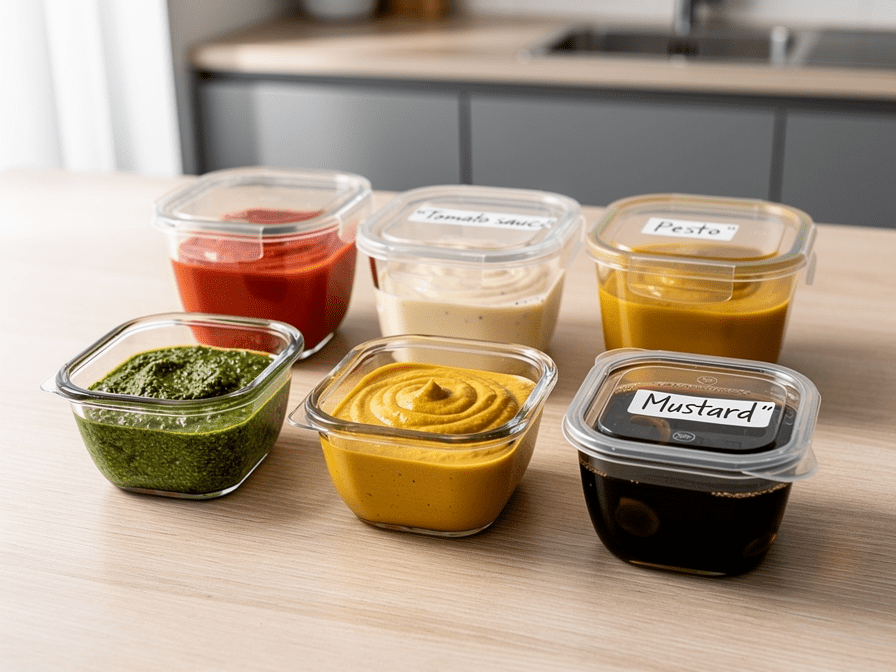
14. Store Leftover Sauces and Condiments in Small Glass Portions Half a can of tomato paste, leftover pesto, unused chipotle peppers in adobo — these small-volume leftovers are the most common fridge waste because there is no obvious container for them. A 150ml glass container holds exactly the amount of leftover sauce that most recipes leave behind. Seal it, label it, use it within 5 days. Container: 150ml (5oz) for single-use sauce remnants. 320ml (10.8oz) for larger leftover sauce portions. Freshness gain: Small glass sauce containers eliminate the leading cause of fridge waste in most households. |

|
15. Store Meal Prep Salads With Dressing Separate A salad meal prepped on Sunday wilts by Monday if the dressing is added. The fix is a 150ml glass sauce container inside the main 1040ml salad container — dressing stays separate, greens stay crisp, dressing is added at eating time. The full salad with separate dressing container stays fresh and crunchy for 4 days. Container: 1040ml (35oz) for a main salad portion. 150ml (5oz) sauce container for dressing, stored inside or alongside. Freshness gain: Salad with separate glass dressing container stays crisp 4 days vs wilting within 24 hours with dressing added. |

Frequently Asked Questions
Do glass containers really keep food fresher than plastic?
Yes. Glass is non-porous it does not absorb food odors, flavors, or bacteria between uses. It also does not interact chemically with food, which matters for acidic foods like tomato sauce, lemon, and vinegar. Glass vs plastic food storage has the full comparison with the specific scenarios where glass outperforms plastic.
What size glass container should I use for leftovers?
Match the container to the food volume with minimal headspace — no more than 1 to 2 inches of air above the food. Excess headspace means excess oxygen, which speeds spoilage. How to organize the fridge with glass containers covers the size-matching system for every common leftover type.
Can glass food storage containers go in the microwave?
Borosilicate glass is microwave-safe — it handles the rapid temperature change without cracking. Remove the plastic lid before microwaving. Complete microwave guide for glass covers timing and safety for every glass container type.
How do I prevent food from drying out in glass containers in the fridge?
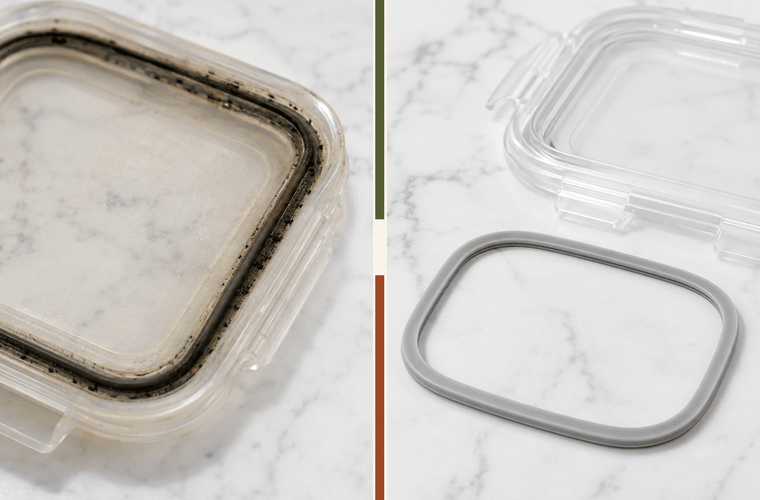
Two causes: wrong container size (too large creates excess headspace) or a failing gasket. For grains and cooked proteins, use a container that fills to within an inch of the lid. Check the silicone gasket on older containers — a cracked or loose gasket breaks the airtight seal and allows moisture to escape.
Glass food storage starts working the moment you match the container size to the food volume and seal it properly. Razab glass food storage containers are available in sizes from 150ml sauce containers to 2700ml batch storage — all borosilicate, all dishwasher-safe, all with snap-lock silicone gasket lids. The 35-piece set covers every size in this guide in one purchase.
|
About the Author Produced by the Razab Meal Prep Research Team. We tested every food category in this guide across confirmed Razab container sizes to verify the freshness timelines. Razab is a woman-owned brand, designed in New York and trusted by over 1 million US families since 2017. Published on: August 7, 2026 |
Conversation
Join the discussion