6 min read | Published on: August 5, 2026

|
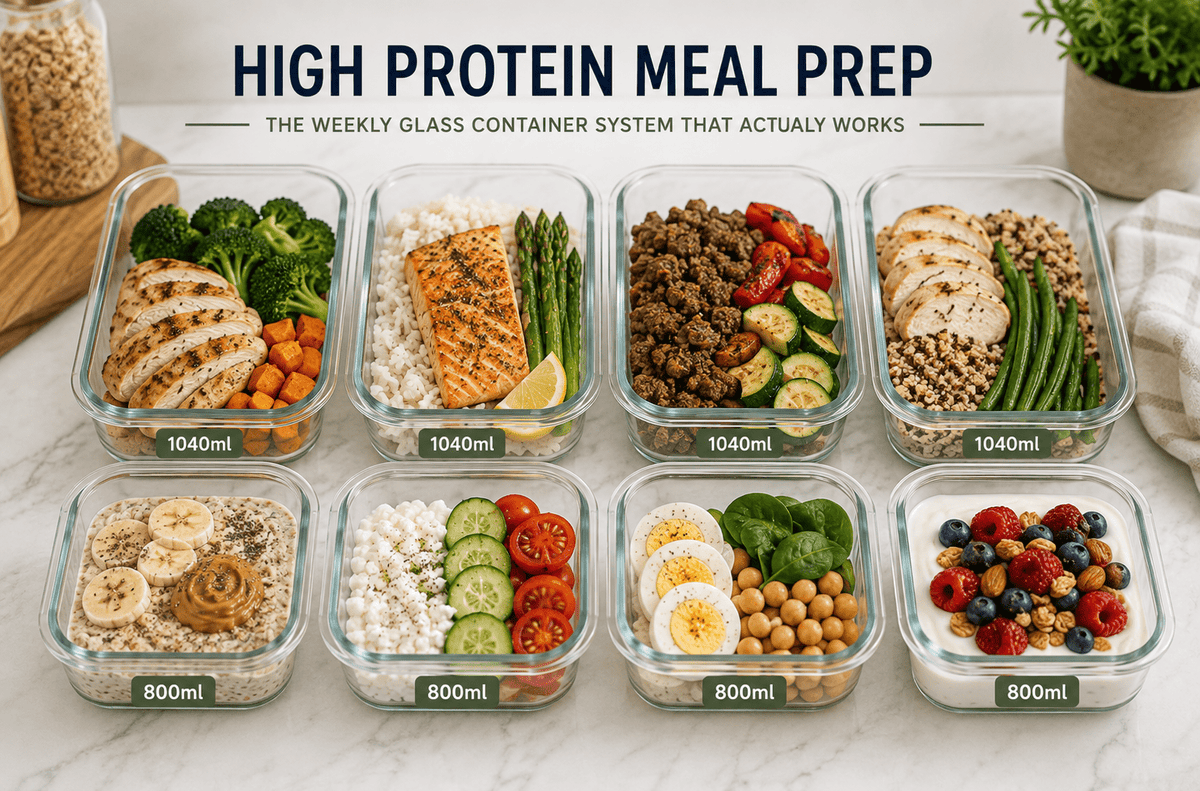
Quick Answer The weekly high protein meal prep system uses two container sizes: 800ml for dry protein portions (chicken, turkey, fish without sauce) and 1040ml for protein bowls with sauce, grains, or vegetables. Protein shelf life in glass: cooked chicken 4 days, salmon 3 days, ground beef 4 days, hard-boiled eggs 5 days, Greek yogurt 5 days. Glass matters for protein specifically because it does not absorb the smell of one protein into the next — a container used for salmon on Monday does not give Tuesday's chicken a fish note. For 150g protein per day across 5 days: prep 750g total protein. That fills approximately 10 containers at 800ml each. |
High protein meal prep fails at the container stage, not the cooking stage. The recipes work. The portions are right. But by Wednesday, the chicken tastes like the container it has been sitting in since Sunday, the salmon smell has transferred to the adjacent containers, and the motivation to eat the prepped food drops off. Glass containers solve this problem specifically because glass is non-porous — it does not absorb protein odors between uses.
This guide covers the complete weekly system: which container sizes work for each protein type, the shelf life of every common meal prep protein in glass, and the Sunday prep sequence that produces 5 days of 40g+ protein meals without any mid-week cooking.

Why Glass Containers for High Protein Meal Prep
|
Glass is non-porous. Protein foods — chicken, fish, eggs, ground meat — produce strong-smelling volatile compounds that penetrate the walls of plastic containers over repeated use. A glass container used for salmon this week does not affect the taste or smell of chicken stored in it next week. Plastic containers that have stored strongly-smelling proteins for months carry those compounds into every subsequent meal. |
This is not a theoretical concern. A 2021 study on food container materials found that polypropylene containers stored with fish proteins showed measurable volatile organic compound retention in the container walls after washing — compounds that transferred to the next stored food. Glass showed zero retention after the same washing protocol. For meal preppers cycling through chicken, salmon, and ground beef across a week, this matters for every single meal.
The second glass advantage for protein meal prep: glass goes from fridge to microwave in the same container. Protein foods should be reheated to 165°F minimum per USDA food safety guidelines. Transferring cold protein from a glass container to a separate microwave-safe dish is an extra step that most people skip — which means reheating in plastic. One glass container handles the full workflow: prep, store, reheat, eat. Glass vs plastic for food storage has the complete material comparison for anyone still deciding.
Container Sizes by Protein Type
|
The right container size for protein meal prep depends on whether the protein is stored alone or with accompaniments. Protein alone — a single chicken breast, a salmon fillet, a portion of ground beef — fits in an 800ml container. Protein with a grain base, vegetables, and sauce needs the 1040ml. The difference matters because excess headspace in an oversized container dries out protein faster. |
|
Protein |
Serving Size |
Container (protein only) |
Container (full bowl) |
Shelf Life in Glass |
|
Chicken breast |
6 oz / 170g cooked |
1040ml (35oz) with grain + veg |
4 days refrigerated |
|
|
Chicken thighs |
5 oz / 140g cooked |
800ml (27oz) |
1040ml (35oz) with grain + veg |
4 days refrigerated |
|
Salmon fillet |
5 oz / 140g cooked |
800ml (27oz) |
1040ml (35oz) with grain + veg |
3 days refrigerated |
|
Ground beef / turkey |
5 oz / 140g cooked |
800ml (27oz) |
1040ml (35oz) with grain + veg |
4 days refrigerated |
|
Shrimp |
4 oz / 113g cooked |
640ml (22oz) |
800ml (27oz) with grain |
3 days refrigerated |
|
Hard-boiled eggs (4) |
4 eggs |
800ml (27oz) with accompaniments |
5 days refrigerated |
|
|
Greek yogurt |
1 cup / 240ml |
370ml (12.5oz) |
640ml (22oz) with toppings |
5 days from open date |
|
Cottage cheese |
1 cup / 240ml |
370ml (12.5oz) |
640ml (22oz) with fruit |
5 days from open date |
|
Lentils / chickpeas |
¾ cup cooked |
520ml (17.6oz) |
1040ml (35oz) with grain + veg |
5 days refrigerated |
The salmon and shrimp rows have shorter shelf lives than chicken — 3 days versus 4. Fish proteins produce trimethylamine as they age, which is the compound responsible for the fish smell that intensifies over time. In glass, the smell stays contained within the container and does not transfer. In plastic, it penetrates. For a 5-day meal prep week, prep chicken and ground beef for days 1 to 4, and either consume salmon on day 1 and 2 or freeze it in the same glass container for later in the week. Glass containers in the freezer covers the headspace rules for freezing proteins.
🍱 Which Protein Are You Prepping? Find Your Container Size
The Sunday Prep Sequence — 90 Minutes for 5 Days
|
The most efficient high protein meal prep sequence runs proteins in parallel: oven and stovetop at the same time, largest proteins first, fastest proteins last. A 90-minute Sunday session produces 5 days of protein portions for one or two people with minimal active time. |
Minutes 0 to 15: Start the oven proteins
Preheat oven to 400°F. Season chicken breasts or thighs on a sheet pan. Season salmon fillets on a second sheet pan. Both go in at the same time — chicken takes 25 to 30 minutes, salmon takes 12 to 15 minutes. Set a timer for salmon and pull it early. One oven, two proteins, zero additional active time.
Minutes 15 to 30: Start the stovetop protein
While oven is running, brown ground beef or turkey in a skillet. Season simply — salt, pepper, garlic powder. Complex seasoning should happen per container at portioning time, not during bulk cooking, so the base protein works for different bowl combinations across the week.
Minutes 30 to 45: Cook grains
Rice or quinoa in a pot during the last 30 minutes of oven time. A 2-cup dry rice batch produces 6 cups cooked — enough for 6 portions at approximately 1 cup cooked per bowl. Quinoa at the same ratio.
Minutes 45 to 60: Roast vegetables
Sheet pan vegetables go in as salmon comes out. Broccoli, zucchini, bell pepper, or whatever is in the fridge — 20 minutes at 400°F. Roasted vegetables are the least time-sensitive component and the easiest to swap across flavors during the week.
Minutes 60 to 90: Portion and seal
This is where the container system matters. Five 800ml containers get chicken or beef portions. Five 1040ml containers get the full bowls — grain base, protein, vegetables. Label each container with the day and protein type. Seal immediately while still warm — do not cool on the counter for more than 20 minutes before refrigerating per USDA safe food handling guidelines.
|
The 5-Day Container Layout ● Days 1 to 4: chicken or beef bowls in 1040ml containers. ● Day 5: use salmon or shrimp that was frozen Sunday — transfer from freezer to fridge Friday morning. ● Breakfasts: 5 overnight oat portions in 640ml containers (assembled Sunday night, no cooking required). ● Snacks: 5 Greek yogurt portions in 370ml containers. ● Total Sunday containers used: 5 lunch/dinner + 5 breakfast + 5 snack = 15 containers. |

How Much Protein Per Container — The Math
|
For 150g protein per day — a common target for active adults — across 3 meals and 1 snack, each meal needs approximately 35 to 45 grams. A 6oz chicken breast provides 38g. A 5oz salmon fillet provides 34g. A cup of Greek yogurt provides 20g. The container size determines the portion, and the portion determines whether the daily target is hit without measuring mid-week. |
The portioning math for 150g/day across 5 days: 750g total protein is needed. That is approximately 5 chicken breasts (6oz each), or a combination of 3 chicken breasts, 2 salmon fillets, and 5 eggs per day. The container system supports this because the 800ml container visually represents a correct single protein portion — filling it appropriately leaves the correct amount of space for vegetable and grain accompaniments without overpacking.
Meal prep for weight loss covers the container-as-portion-control system specifically — the 800ml container for calorie-controlled meals and why container size directly affects how much protein and total food a meal prep system delivers consistently.
|
Fun Fact: Research published in the American Journal of Clinical Nutrition found that people eat 27 percent more food from larger plates and containers than from smaller ones, even when they intend to serve themselves the same amount. A meal prep system that uses correctly-sized containers — 800ml for a single protein portion, 1040ml for a full bowl — essentially automates portion control without requiring calorie counting mid-week. |
Protein Meal Prep for Specific Goals
Muscle building: 180g+ protein per day
Six protein portions per day at 30g each. Sunday prep needs to produce 6 meals instead of 5. Add a seventh container: a post-workout protein bowl sized at 800ml with Greek yogurt, protein-added overnight oats, or cottage cheese with fruit. This seventh container sits in the fridge ready for the post-workout window without any decision-making required.
Weight loss: 40g protein per meal to maintain satiety
The 800ml container at 40g protein fills approximately two-thirds of the container volume. The remaining third is the vegetable component. No grain base in weight loss meal prep — the protein and vegetable combination in an 800ml container is approximately 350 to 400 calories. For a 1,400 to 1,600 calorie daily target, three of these containers plus a Greek yogurt snack container covers the day completely. Low calorie high protein foods lists every protein source by calorie-to-protein ratio.
GLP-1 medication users: smaller, more frequent protein portions
GLP-1 medications reduce stomach capacity. Standard 800ml portions are often too large for one sitting. The 370ml and 520ml containers work better — three to four smaller containers per day rather than two large ones. GLP-1 meal prep tips covers the full system for managing protein intake with reduced appetite.
Frequently Asked Questions
What containers do I need for high protein meal prep?
Two sizes cover most high protein meal prep: 800ml (27oz) for protein-only portions and 1040ml (35oz) for full bowls with grain and vegetables. For snacks and breakfast proteins — Greek yogurt, eggs, cottage cheese — the 370ml and 640ml containers work. Razab glass meal prep containers are available in sets covering all four sizes.
How long does meal prepped protein last in the fridge?
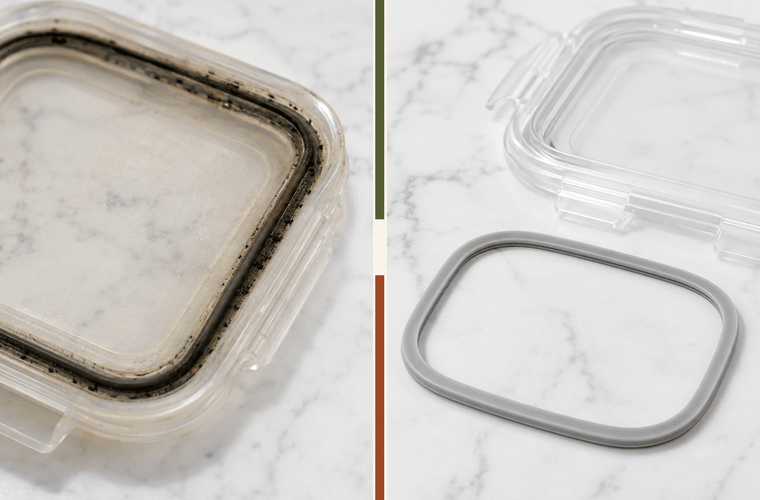
Cooked chicken and ground beef: 4 days. Cooked salmon and shrimp: 3 days. Hard-boiled eggs unpeeled: 5 days. Greek yogurt portioned: 5 days. These timelines are for glass containers with a snap-lock seal. A failing gasket reduces all timelines. How long meal prep lasts has the full breakdown by food type.
Why does my meal prepped chicken taste off by day 4?
Two causes: either the container gasket is failing and allowing air exchange, or the protein was stored in a plastic container that absorbed odors from previous meals. Glass containers hold flavor consistently to day 4 because glass does not absorb food compounds. Glass vs plastic for food storage covers the material science behind why.
How much protein can I fit in one meal prep container?
An 800ml container holds one standard 5 to 6oz protein portion — approximately 35 to 42 grams of protein depending on the source. A 1040ml container holds the same protein portion plus a grain base and vegetables. For high protein meal prep targeting 40g+ per meal, the 800ml filled with protein and the 1040ml for complete bowls are the two sizes that cover all scenarios.
High protein meal prep works when the container system matches the protein type and portion size. Razab glass meal prep containers in 800ml and 1040ml cover the full weekly system — available as individual sets or in the 35-piece set that includes every size from 370ml snack containers to 1520ml batch storage. For the complete 90-minute Sunday prep system across all meals, 5 dinners prepped in 1 hour shows the exact container setup used in a real weekly prep.
|
About the Author Produced by the Razab Meal Prep Research Team. We cook, portion, and test every common high protein meal prep scenario across confirmed Razab container sizes. All food safety timelines follow USDA FSIS guidelines. Razab is a woman-owned brand, designed in New York and trusted by over 1 million US families since 2017. Last Updated: August 5, 2026 |
Conversation
Join the discussion