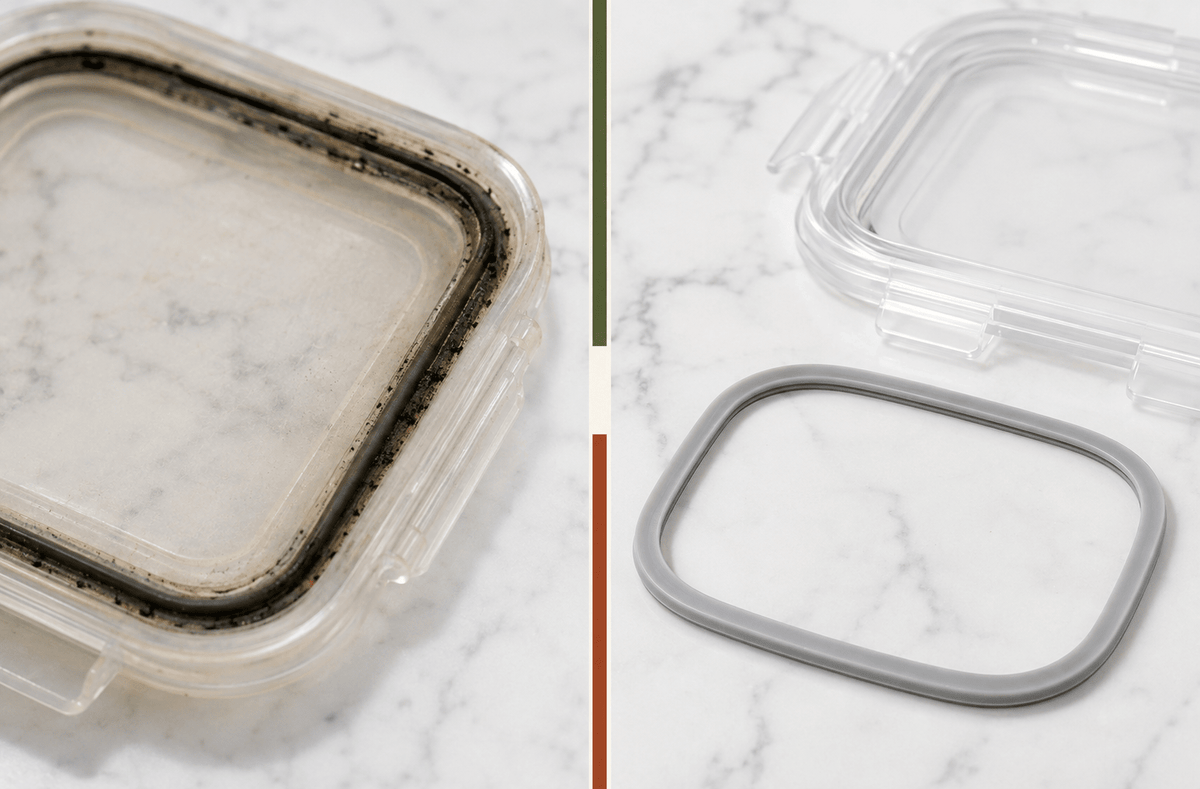

Every week, millions of families rinse their glass food storage containers with lids, snap the lid back on, and call it clean. The glass body is spotless. But what is happening under that silicone seal is a different story entirely.
The seal — the rubbery ring pressed into the groove of your lid is the most neglected surface in your kitchen. And according to microbiologists, it may be harboring more bacteria than your bathroom floor.
This post breaks down why container lid gaskets become mold traps, which seal designs are safe, and the exact cleaning protocol that eliminates the problem in under five minutes.
Quick Answer: How Dangerous Is the Hidden Mold Under Container Lid Seals?
Microbiology studies show that unwashed food container lid seals can harbor up to 10 times more bacteria than a standard household toilet seat. Trapped moisture and food particles under non-removable rubber gaskets create an ideal breeding ground for toxic black mold (Aspergillus). The risk is not the glass body — it is the lid seal. Containers with fixed, non-removable gaskets cannot be fully sanitized, making them a hidden contamination source in otherwise careful kitchens.
The Hidden Danger: Why Silicone Gaskets Become Bacteria Breeding Grounds
The physics of a sealed container work against you. When you pack hot food and seal the lid, steam builds pressure inside. As the contents cool, that pressure reverses — and the contracting air pulls microscopic food particles into every crack and gap around the gasket.
Once those particles are under the seal, they sit in a dark, moist, oxygen-poor environment. That is precisely where bacteria like E. coli, Staphylococcus aureus, and mold spores from the Aspergillus family thrive. The same dynamic happens every time you microwave food in a container — steam is forced under the seal, and when the container cools, that contaminated moisture is sucked back in.
The toilet seat comparison is not an exaggeration. Research on kitchen surface contamination consistently finds that frequently touched, inadequately cleaned surfaces in the kitchen — cutting boards, sponges, and sealed lids — carry microbial loads that rival or exceed bathroom surfaces. Bathroom surfaces get wiped with disinfectant. Container lid seals almost never do.
Related Reading: how to get smells out of glass jars

The problem compounds over time. Each seal-and-cool cycle deposits a thin film of protein, fat, and starch residue. Within a week of normal use, that film becomes a biofilm — a sticky matrix that protects bacteria from ordinary soap and water. By the time you see black discoloration in the groove, the colony has been there for weeks.
Plastic and Cheap Lids vs. Razab's Easy-Remove Food-Grade Silicone Seals
Most budget food storage containers ship with gaskets that are either glued into the lid or molded as a fixed component. You cannot remove them. You can run water over them, but you cannot get soap and a brush into the groove where contamination lives.
There is a second problem with cheap plastic lid materials. Repeated exposure to hot water, steam, and acidic foods causes the plastic to micro-fracture over time. Those fractures become additional traps for bacteria surfaces that look intact are actually riddled with grooves invisible to the naked eye.
Razab containers use a different design approach. The silicone seal ring is fully removable — it lifts out with a fingernail or a dull butter knife. The lid body itself is smooth injection-molded plastic with no hidden crevices. The seal ring is made from food-grade, BPA-free silicone that does not absorb odors or micro-fracture under heat.
This means you can actually clean every surface that touches your food. The glass body, the lid body, and the silicone ring each wash separately and can be dried completely before reassembly. Replacement lids and silicone seals are also available individually — so if a seal wears out, you replace the seal, not the entire container.
Related Reading: borosilicate glass vs tempered glass
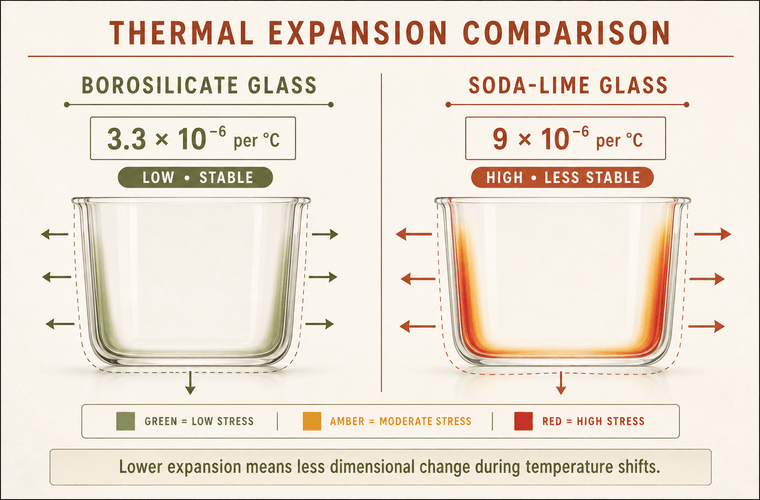
Non-porous borosilicate glass does not absorb bacteria or odors. As Better Homes & Gardens noted in their roundup of the best glass food storage containers, the material advantage of borosilicate goes beyond heat resistance — it is genuinely easier to keep sanitary because the surface gives bacteria nothing to grip.
Step-by-Step: The 5-Minute Lid Sanitizing Protocol

Step 1 — Remove the Silicone Ring
Press your thumbnail or a dull butter knife under the edge of the silicone ring at any point in the groove. Work your way around the lid — the ring will release cleanly without force. Do not use a sharp knife. If the ring does not lift, the gasket is likely glued in. That is a separate problem addressed in the table below.
Step 2 — The Vinegar and Baking Soda Soak
Place the ring in a small bowl. Pour enough undiluted white vinegar to submerge it completely. Let it soak for 15 minutes. Vinegar's acetic acid is an effective natural mold killer at concentrations found in household cleaning vinegar (5% acidity).
After 15 minutes, sprinkle a small amount of baking soda over the ring while it is still in the vinegar. The fizzing reaction lifts loosened biofilm from the silicone surface. Use a small brush — a toothbrush works — to scrub the entire surface, paying attention to any textured or ribbed areas.
If you see visible black discoloration that does not lift after scrubbing, the mold has penetrated the silicone. At that point, the seal should be replaced. Replacement lids for glass containers are available at Razab — order the correct size for your container.
Step 3 — Drying Rules (This Step Is Not Optional)
After washing, rinse the ring with clean water and place it on a dry surface, not back on the lid. Let it air dry completely — meaning no visible moisture — before reassembling. This takes 20 to 30 minutes at room temperature.
Snapping a damp ring back onto a lid recreates the mold trap. Even a thin film of water in an enclosed groove is enough moisture for mold regrowth within 48 hours. If you are in a hurry, pat the ring dry with a clean cloth before reassembly.
The same logic applies after running lids through the dishwasher. Always remove the ring before loading — dishwasher spray often does not reach under a sealed gasket. And always check that the ring is fully dry before sealing it back.
Related Reading: dishwasher safe glass containers
Sanitizing and Material Comparison
|
Lid Seal Type |
Mold Risk |
Cleaning Difficulty |
Dishwasher Safe? |
Recommended Action |
|
Fixed rubber (cheap plastic) |
VERY HIGH |
Impossible |
No (degrades) |
Replace container |
|
Glued silicone (budget brands) |
HIGH |
Very difficult |
Sometimes |
Manual scrub every use |
|
Removable silicone (Razab) |
LOW |
Easy — 5 mins |
Yes |
Remove + deep clean weekly |
|
No seal / snap-fit lid |
MEDIUM |
Easy |
Yes |
Inspect hinge area monthly |
Frequently Asked Questions
How often should you remove and clean the rubber seal on food containers?
Remove and deep-clean the silicone ring at least once a week with active use. If you are storing high-protein foods — raw chicken, cooked meat, fish — clean the ring after every single use. Protein residue is the fastest biofilm builder and the most dangerous contamination source. Pair the habit with your regular glass meal prep containers wash day and it becomes automatic.
Does the dishwasher kill black mold under container lid gaskets?
Not reliably, and not if the seal is installed during the wash cycle. Dishwasher water reaches temperatures of 120 to 140°F — high enough to kill most bacteria on exposed surfaces. But water and detergent do not penetrate under a seated gasket. The dishwasher sanitizes the surfaces it can reach. The groove under the seal remains untouched. Remove the ring every time before loading.
Can mold on a container lid make you sick?
Yes. Aspergillus species — the most common black mold found on food contact surfaces — produce mycotoxins. Ingesting these compounds in small amounts over time has been linked to digestive upset, immune system stress, and in people with mold sensitivities, respiratory symptoms. The risk is cumulative. A container that looks fine on the surface but has a colonized gasket is exposing your family to mycotoxins with every meal.
How do I know if my current container lid gasket is removable?
Try pressing your thumbnail under the edge of the ring. On removable designs, you will feel it flex and lift within a few millimeters of pressure. On fixed designs, there is no flex — it feels like pressing on the lid body itself. If your current containers have fixed gaskets, that is the clearest argument for switching to a container system built for actual hygiene.
Are there other surfaces in my kitchen I should clean the same way?
Yes. Any sealed, grooved, or creviced surface that contacts food repeatedly — blender jar seals, water bottle lids, reusable straw caps, and the grooves around pot lids — follows the same contamination pattern. The same vinegar soak protocol works on all food-grade silicone parts. For how long raw chicken can stay in the fridge safely, your container hygiene matters as much as your fridge temperature.
What should I do if my glass container itself smells even after washing?
That is almost always a lid seal issue, not a glass issue. Borosilicate glass is non-porous and does not absorb odors. If the container smells after washing, the gasket has absorbed food compounds that washing did not remove. Try the vinegar soak on the ring, then check our full breakdown on how to get smells out of glass jars for a complete protocol.
About the Author
This guide was produced by the Razab Product Research Team. Our team stress-tested the removable silicone seal design across 200 cycles of refrigeration, microwaving, and dishwashing to verify that the gasket releases cleanly, reseats without deformation, and shows zero mold retention at the 30-day mark. Our mission is to help families reduce food waste through better storage science.
Conversation
Join the discussion