
1. Why Food Goes Bad Faster Than It Should
Food spoils through four main culprits: bacteria, mold, enzymes, and oxidation. Temperature, moisture, and exposure to air are the variables you can actually control and controlling them is the entire game of food preservation.
Most people store food the way they’ve always seen it done, never questioning whether it’s actually right. Spoiler: bananas on the counter with apples nearby, tomatoes in the fridge, and bread in the pantry uncovered all common, all wrong.
The four enemies of fresh food:
-
Temperature bacteria multiply fastest between 40°F-140°F. Keep cold foods cold, consistently.
-
Moisture excess moisture breeds mold. Too little dries food out. Balance is everything.
-
Air exposure oxygen causes oxidation, turning fats rancid and browning produce.
-
Light UV light degrades nutrients and accelerates spoilage in oils, dairy, and produce.
2. The Fridge Zones You’re Probably Ignoring
Your refrigerator is not one uniform cold box. It has distinct temperature zones, and putting the right food in the right zone can double or triple its freshness.
- Top shelves (35-38°F) stable temperature zone. Best for: leftovers, drinks, ready-to-eat foods, herbs in water. This zone has the least temperature fluctuation.
- Bottom shelves coldest zone. Best for: raw meat, fish, and poultry. Always store these on the bottom to prevent drips contaminating other food.
- Crisper drawers humidity controlled. High humidity drawer for leafy greens and vegetables. Low humidity for fruits. Don’t mix them. Fruits emit ethylene gas that wilts greens.
- Door warmest spot. Best for: condiments, juice, butter. Never store eggs or milk here. Temperature swings are too unpredictable.
Pro Tip: Set your fridge to 37°F (3°C) , the sweet spot that slows bacterial growth without freezing delicate produce. Use a cheap fridge thermometer to verify; most built-in displays are inaccurate by 3-5 degrees.

3. How to Store Fruits and Vegetables Properly
Produce is the category where most people go wrong and where better storage habits save the most money. The biggest mistake? Storing everything together.
Keep these fruits away from vegetables
Apples, bananas, peaches, pears, and avocados release ethylene gas as they ripen. This gas accelerates ripening in nearby produce. If you want to ripen something fast, disastrous if you want everything to last.
Never Store These Together
- Apples + leafy greens (greens yellow in days)
- Bananas + anything you want to keep fresh
- Avocados + salad greens or herbs
- Tomatoes in the fridge (cold destroys texture and flavor)
The paper towel trick for greens
Line your salad container or bag with a dry paper towel before storing leafy greens. The towel absorbs excess moisture, the #1 cause of slimy, wilted leaves. Replace it every 2 days. Your lettuce will last up to 10 days instead of 3.
Storing herbs like a professional
Treat soft herbs (cilantro, parsley, basil) like flowers: trim the stems and place them in a glass of water. Cover loosely with a plastic bag and store in the fridge door. Basil is the exception, it’s tropical and hates cold, so keep it on the counter at room temperature.

4. Pantry and Dry Goods The Right Way
Your pantry has enemies: heat, humidity, and light. The area above your stove or near the dishwasher is the worst possible place to store spices, oils, or grains yet it’s where most people put them.
Airtight containers change everything
Transferring flour, rice, oats, sugar, and cereals into airtight glass food storage containers or BPA-free plastic containers does three things keeps moisture out, keeps pests out, and keeps your food fresher for months longer. It’s a one-time investment that pays for itself.
Olive Oil: Store in a dark cupboard away from the stove. Light and heat turn olive oil rancid within weeks. A good extra-virgin olive oil stored properly lasts 18 to 24 months. The same oil stored next to your hob: 4 to 6 weeks.

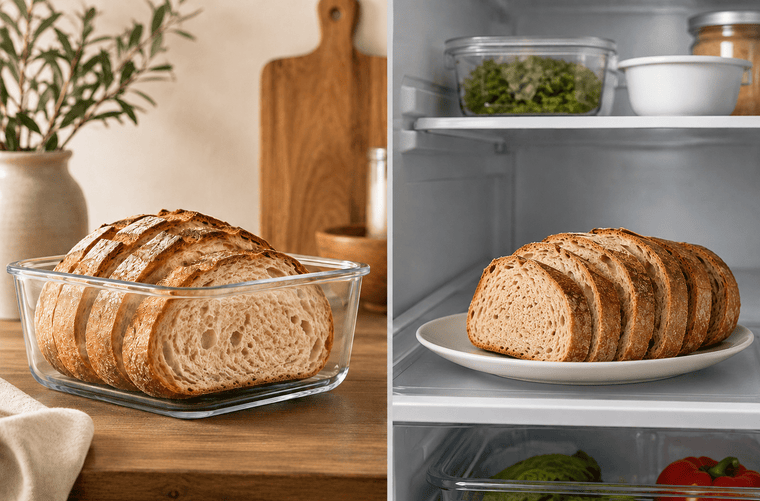
Bread: the fridge is actually the worst place
Cold temperatures cause bread to stale faster through a process called retrogradation. Store bread at room temperature in a bread box or paper bag for up to 5 days. For longer storage, freeze it immediately and toast slices directly from frozen.
5. Meat, Dairy, and Leftovers: Shelf Life at a Glance
Here’s your reference guide for how long common foods actually last when stored correctly:
|
Food |
Fridge |
Freezer |
Storage Tip |
|
Raw chicken |
1–2 days |
9 months |
Bottom shelf, original packaging |
|
Raw ground beef |
1–2 days |
3–4 months |
Freeze in portions; label with date |
|
Cooked meat |
3–4 days |
2–6 months |
Shallow airtight containers |
|
Whole milk |
5–7 days |
3 months |
Back of fridge, not the door |
|
Hard cheese |
3–4 weeks |
6 months |
Wax paper, then loosely in plastic |
|
Eggs |
3–5 weeks |
1 year (beaten) |
Original carton on main shelf |
|
Cooked leftovers |
3–4 days |
2–3 months |
Cool quickly; max 2 hrs at room temp |
|
Leafy greens |
7–10 days |
Not ideal |
Paper towel; high humidity drawer |
|
Berries |
3–7 days |
6–12 months |
Vinegar rinse; dry before storing |
The vinegar rinse for berries
Mix 1 part white vinegar with 3 parts water. Submerge your berries, swirl, and rinse with plain water. Dry thoroughly before refrigerating. This kills surface mold spores that cause berries to go fuzzy within a day or two. Your strawberries and blueberries will last nearly a week longer.

Frequently Asked Questions
Real questions about food freshness, answered simply.
Does freezing kill nutrients in food?
Mostly no. Freezing preserves the vast majority of vitamins and minerals. In fact, frozen vegetables are often more nutritious than ‘fresh’ produce that has spent days in transit, the freezing process locks in nutrients at peak ripeness.
Should I wash produce before or after storing?
After, for most produce. Washing before storage introduces moisture that accelerates mold and rot. The exception is berries (use the vinegar rinse above) and leafy greens stored in damp paper towels. Wash everything right before eating or cooking.
How do I keep avocados from browning?
Brush the cut surface with lemon or lime juice and press cling film directly onto the flesh before refrigerating. If storing a half with the stone, keep the stone in. It reduces the exposed surface area. The best method: store the unused half flesh-side down on a plate.
Is it safe to eat food past its ‘best before’ date?
Best before’ means quality, not safety. Most dry goods, canned foods, and frozen items are perfectly safe to eat days or even weeks after this date. ‘Use by’ dates are different; those are genuine safety deadlines, especially for raw meat, fish, and dairy.
What’s the best way to store coffee?
In an airtight, opaque container at room temperature not in the fridge or freezer. Temperature fluctuations cause condensation that damages the coffee. Buy whole beans, grind as needed, and use within 2 to 4 weeks of the roast date for the best flavor.
Start Saving Food (and Money) Today
Small storage changes make a big difference. Pick one habit from this guide and implement it this week you’ll notice the difference by your next grocery shop. Share this guide with anyone who wants to reduce food waste and save money.
Conversation
Join the discussion