Kitchen Tips
Best Glass Tupperware Sets (2026): How to Pick the Right Set and Compare Real Cost Per Container
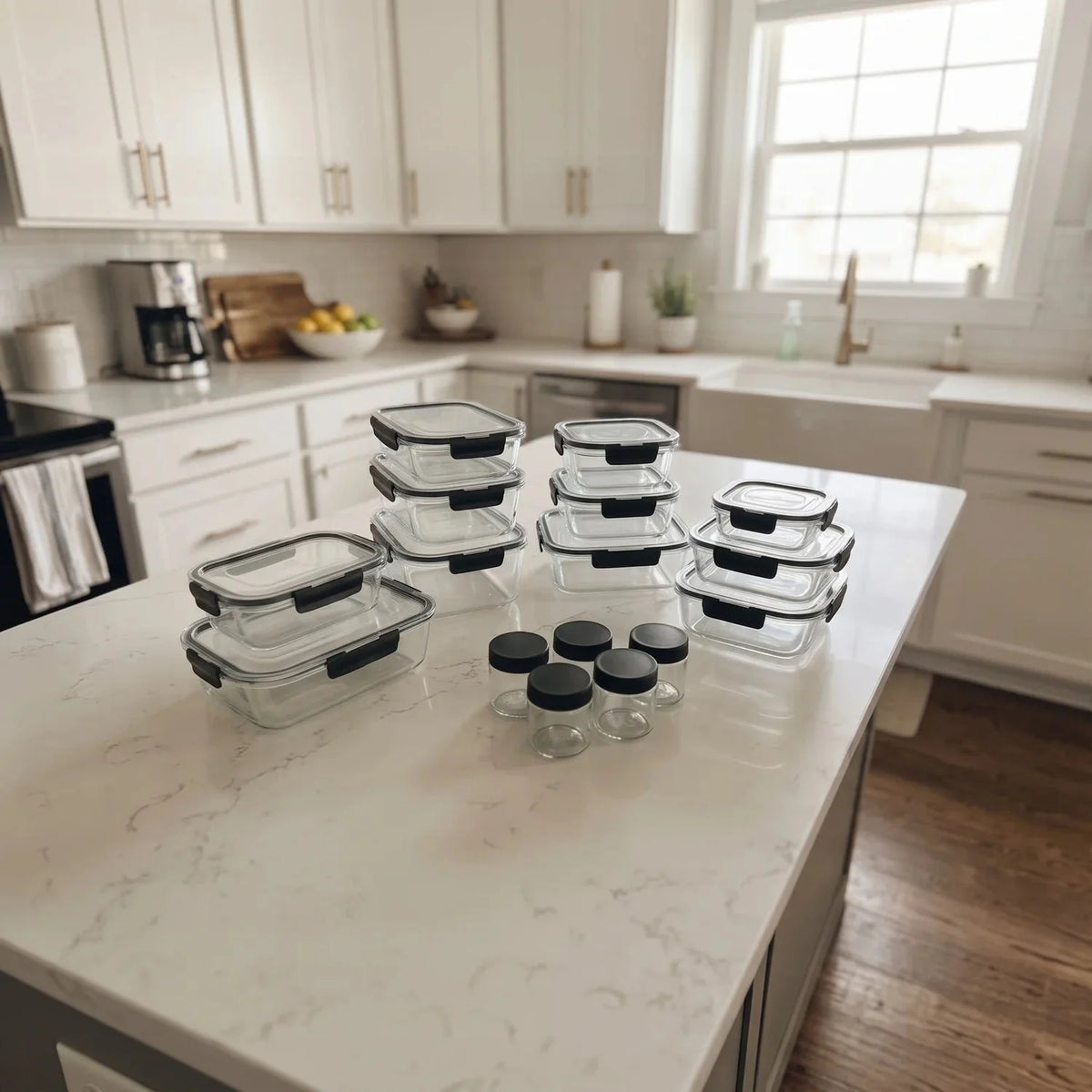
Piece counts include lids, so a 24-piece glass tupperware set is only 12 containers. Compare five Razab glass sets by real cost per container before you buy.
In this article
Quick answer: The best glass tupperware set for most kitchens has borosilicate glass, locking lids with removable silicone seals, enough matching sizes for a week of meals, and lids you can replace. Before you buy, divide the price by the number of containers, not pieces. Piece counts include lids, so a "24-piece" set is really 12 containers.
Many people say "tupperware" for any food storage container, and that's how we use it here. Razab glass food storage sets are not Tupperware-brand products.
This guide compares Razab's glass food storage sets side by side, using the prices and contents shown on each product page at the time of writing. It covers what to look for in a set and the honest downsides of glass. It doesn't repeat our deeper guides on sizes, safety and glass vs plastic. Those are linked where they help.
Best glass tupperware sets at a glance: 5 Razab sets compared
Prices and contents below come from each live product page on November 20, 2026. Prices change often, so check the product page before you buy. "Cost per container" is the set price divided by the number of glass containers (lids and bonus cups not counted).
| Set | Price | Pieces (as sold) | Actual containers | Cost per container | Size range (per product page) | Best for |
|---|---|---|---|---|---|---|
| 30-piece glass meal prep set | $54.99 | 30 | 15 glass containers + 15 lids | $3.67 | 6–35 oz; 5 round, 5 square, 5 rectangular | Weekly meal prep on a budget |
| 40-piece glass storage set | $69.99 | 40 | 20 glass containers + 20 lids (15 meal containers + 5 × 1 oz glass sauce jars) | $3.50 (all 20) / $4.67 (15 meal containers) | 1–51 oz; ten sizes | Families who want sauce jars too |
| 24-piece glass set | $56.99 | 24 | 12 glass containers + 12 lids | $4.75 | Mixed sizes (see product page) | A starter set with mixed sizes |
| 35-piece glass set | $89.99 | 35 | 15 glass containers + 15 lids + 5 plastic condiment cups | $6.00 | About 5–51 oz; nine glass sizes | The widest size spread |
| 16-piece glass set | $48.99 | 16 | 8 glass containers + 8 lids | $6.12 | Matching containers, all one size | Identical lunch portions |
All five sets use borosilicate glass and BPA-free plastic locking lids with silicone seals, according to their product pages. You can shop the 24-, 30-, 35- and 40-piece sets together in our complete glass container sets collection.
Color options and stock vary by set and change often, and some colors were sold out when this guide was written, so check the product page for what's available.
Best for weekly meal prep: 30-piece set
You get 15 containers, five each in round, square and rectangular shapes, from 6 oz to 35 oz. At $3.67 per container, it has the lowest cost per container of any set here, counting only full-size containers. The product page says the containers are stackable and the glass is microwave- and freezer-safe with the lid removed.
Choose it if you prep lunches and dinners on Sunday and want a mix of shapes for soups, sides and full meals. Shop the 30-piece set
Best value for a family: 40-piece set
This one has the most containers: 15 meal containers (8 rectangular, 7 square) plus five 1 oz glass jars for dressings and dips. That's 20 glass containers and 20 lids. Per the product page, the 21 oz rectangle suits an adult lunch, the 6 oz a kid's snack, and the 51 oz and 37 oz containers family leftovers. Count all 20 and it's $3.50 each. Count only the 15 meal-size containers and it's $4.67.
Choose it if you pack several lunches a day and like dressing on the side. Shop the 40-piece set
Best all-round starter set: 24-piece set
The product page FAQ lists 12 containers: 4 rectangular, 6 square and 2 round, including three matching 27 oz squares for portioning meals.
Choose it if you're replacing a mismatched drawer of plastic and want a little of everything. Shop the 24-piece set
Biggest assortment: 35-piece set
You get 15 glass containers in nine sizes, from about 5 oz up to about 51 oz, in square and rectangular shapes. The set also comes with five bonus condiment cups of about 1.1 oz each. The product page notes those cups are plastic, not glass, so they aren't counted as glass containers here. At $6.00 per glass container it costs more per container, but it spans the widest range of sizes.
Choose it if you cook big batches and also need small containers for snacks and sauces. Shop the 35-piece set
Best for identical lunch portions: 16-piece set
You get eight identical containers with eight lids. Because every container is the same shape, they stack evenly, and the product page says they're designed to stack securely when full.
Choose it if you eat the same portion every weekday and want every lid to fit every base. Shop the 16-piece set
For big batches: the 6-piece large set (check availability)
Razab's 6-piece set has just three large square containers, including a 74 oz and a 40 oz. It was shown as sold out when this guide was written. At $33.99 for three containers ($11.33 each), it's built for casseroles and soups, not lunches. If it's out of stock, the 51 oz containers in the 35- and 40-piece sets are the closest large sizes.
What "piece count" really means (and how to compare sets fairly)
Glass food storage sets almost always count each lid as a piece. That's why a set's piece count is usually double its container count:
- 16-piece = 8 containers
- 24-piece = 12 containers
- 30-piece = 15 containers
- 35-piece = 15 glass containers + 5 plastic condiment cups
- 40-piece = 20 containers (15 meal-size, 5 tiny jars)
Food & Wine raised the same point when it tested the Razab 6-piece set. Its reviewer called it "an awfully high price for a set with only three containers" (Food & Wine). That's fair, and it's why we list cost per container above.
To compare any two sets fairly:
- Count the containers, not the pieces. Divide the piece count by two for most sets, then subtract any bonus cups or sauce jars you won't use.
- Divide the price by that number. This is your real cost per container.
- Check how many are meal-sized. Five 1 oz jars lower the average but won't hold a lunch. Pricing by meal-size containers shows the true value for meal prep.
- Check what's left after one week. If you prep 10 meals, a set with 8 meal-size containers will leave you short by Wednesday. Our guide to how many containers you need walks through the math by household.
How to choose a glass tupperware set
Glass type: borosilicate vs tempered soda-lime glass
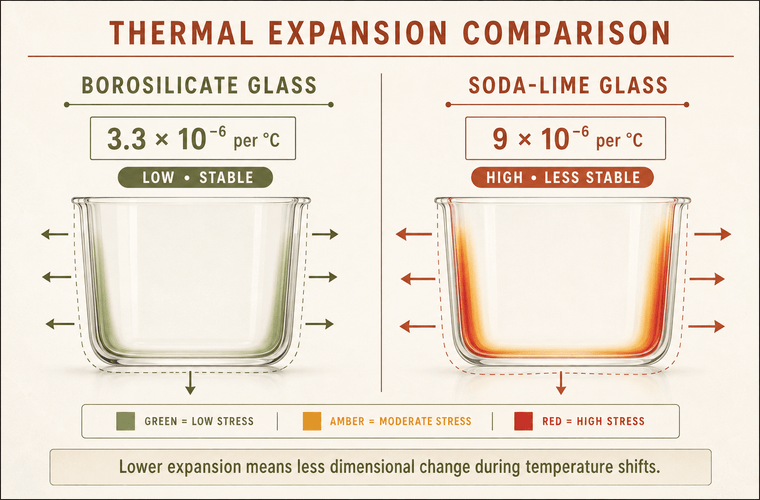
Most glass storage is either borosilicate or tempered soda-lime glass. Borosilicate glass is generally more resistant to thermal shock, the cracking that sudden hot-to-cold changes can cause. Tempered soda-lime glass is heat-treated for strength and is what many mainstream glass sets use. Every Razab set in this guide is labeled borosilicate on its product page. For a full comparison, read borosilicate vs tempered glass.
Lids: locking tabs and removable silicone seals
The lid does most of the work when you pack soup or sauce. Look for:
- Four-side locking tabs that pull the lid down evenly
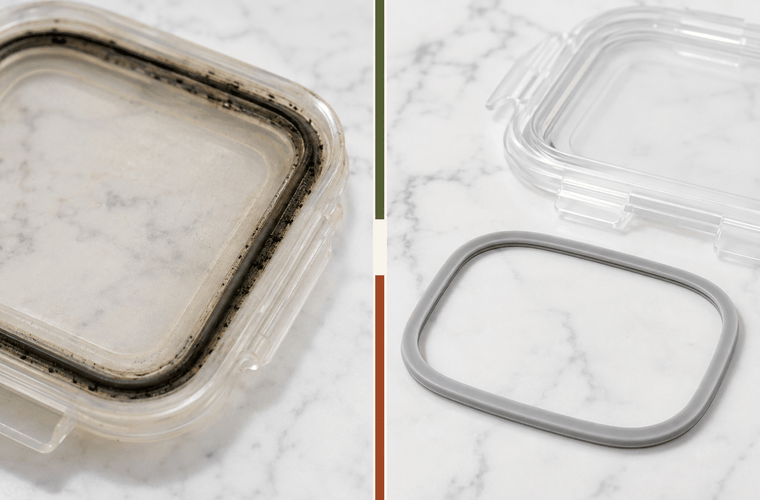
- A removable silicone seal that you can pop out and wash, since food can get trapped under fixed gaskets
- BPA-free lids, since most glass sets, Razab's included, use plastic lids
Plastic lids have one rule: they stay out of the oven and microwave. Every Razab product page says to remove the lid before heating. If you want all-glass lids, note that the Razab sets in this guide all come with plastic lids.
A seal only works when it's seated. If a lid ever stops sealing, our guide on why a glass container lid won't seal covers the usual fixes. You can also read our lid seal durability test.
Matching sizes vs mixed sizes
- Matching sizes, like the 16-piece set, stack neatly and make portioning automatic. Every lid fits every base.
- Mixed sizes, like the 30-, 35- and 40-piece sets, handle everything from dressing to a family casserole but take more organizing.
Most households do best with a few matching meal-size containers plus a handful of small ones. To match sizes to the food you actually make, see which container sizes you need.
Stacking, nesting and storage space
Glass is bulkier than plastic, so think about cabinet space before you buy a 40-piece set.
- Stacking (lids on): square and rectangular containers use fridge shelves better than round ones. The 16-, 30- and 40-piece product pages describe their containers as stackable.
- Nesting (lids off): some sets nest smaller containers inside larger ones when empty, which saves cabinet space. If your cabinets are small, check how a set stores before you buy.
- Lid storage: file lids upright in a drawer organizer instead of stacking them loose.
For a real-world example, see the glass container setup that fits a week of meals on one fridge shelf.
Replacement lids and long-term value
The glass usually outlasts the lid. A set is only good value long-term if you can buy a matching lid later instead of throwing out a good container. Razab's product pages say replacement lids are sold separately.
What are the downsides of glass containers?
Glass isn't perfect, and it's worth knowing the trade-offs before you switch:
- Weight. Glass is heavier than plastic. The Spruce Eats listed "Heavy" as a con of the Razab large set it tested (The Spruce Eats). If you carry lunch on a long commute, smaller containers help.
- Breakage. Glass can chip, crack or shatter if dropped on a hard floor. Even borosilicate glass isn't drop-proof.
- Sudden temperature changes. Moving glass straight from freezer to a hot oven risks cracking. Razab's product pages advise avoiding sudden temperature changes.
- Lid limits. Plastic lids can't go in the oven or microwave, so you'll need a microwave-safe cover when reheating.
- Price. Glass sets cost more up front than plastic packs, which is another reason to compare cost per container.
For many people, the trade is worth it: glass doesn't hold onto tomato stains or curry smells the way plastic can, and you can see what's inside at a glance. If you're on the fence, read our 6-month switch review.
Oven, microwave and freezer: quick rules for glass sets
Always follow the instructions on your specific product. The basics:
- Lids off before heating. Plastic lids don't go in the oven or microwave.
- No sudden temperature swings. Let frozen glass thaw in the fridge before it goes into a hot oven. See freezer to oven.
- Leave headspace when freezing. Liquids expand as they freeze. See freezing glass containers.
- Microwave with a vented cover. See microwaving glass.
- Dishwasher: glass goes in the dishwasher; Razab product pages recommend the top rack for lids.
Food safety: a good container doesn't make leftovers last longer than food-safety guidance allows. USDA advises refrigerating leftovers within 2 hours and eating them within 3 to 4 days, or freezing them (USDA FSIS). USDA also recommends dividing big batches into shallow containers so they cool quickly. FoodSafety.gov's cold food storage chart lists times for specific foods.
What testers say about Razab glass
Two independent reviews have tested Razab's 6-piece large set:
- The Spruce Eats named the Razab Extra Large Glass Food Storage Containers its "Best Large" pick. Its testers said items in the Razab containers "showed the least amount of freezer burn after a week" in side-by-side comparisons. They listed "Heavy" and "Included sizes aren't super versatile" as cons. (The Spruce Eats, updated Oct 21, 2026)
- Food & Wine listed the Razab 6-Piece Square set among its "Strong Contenders." It called the set "an awfully high price for a set with only three containers." (Food & Wine, updated Aug 18, 2026)
Both reviews tested the 6-piece large set, not the 16- to 40-piece sets compared above.
Before you buy: glass storage set checklist
- Count containers, not pieces. Is the price per container reasonable?
- Enough meal-size containers for the meals you prep in a week
- Borosilicate glass if you reheat often
- Locking lids with removable silicone seals
- BPA-free lids, and you know to remove them before heating
- Matching sizes for portioning, plus a few small ones for sides
- Square or rectangular shapes if fridge space is tight
- Cabinet space: can you store it?
- Replacement lids available to buy later
Ready to compare? Browse glass tupperware sets, shop individual glass food storage containers with lids, or see our glass meal prep containers. For a deeper meal-prep comparison, read our guide to the best glass meal prep containers.
Frequently asked questions
What are the best glass tupperware sets?
The best glass tupperware sets combine borosilicate glass, locking lids with removable silicone seals, and enough meal-size containers for your week. Compare by cost per container, not piece count, because lids count as pieces. For example, Razab's 30-piece set is 15 containers at about $3.67 each at the time of writing.
Is glass tupperware better for you?
Glass doesn't absorb stains or odors the way plastic can, and the glass itself isn't made with BPA. Most glass sets still use plastic lids, so choose BPA-free lids and remove them before heating. For the full comparison, read our guide on glass vs plastic.
What is the healthiest container to store food in?
Many home cooks choose glass because it's non-porous, easy to clean and lets you reheat food in a glass container instead of plastic. Whatever you use, food safety depends most on time: USDA advises refrigerating leftovers within 2 hours and eating them within 3 to 4 days.
Where can I find affordable glass tupperware, and what stores sell it?
Glass food storage sets are sold by brand websites, big-box stores, kitchen retailers and online marketplaces. The best deal is the lowest price per container, not the lowest sticker price. Divide the price by the number of containers, leaving out lids, then check that you're getting enough meal-size containers.
Which glass container brand is best?
No single brand is best for everyone. Judge a brand by its glass type, lid seal, piece-count honesty, size options and whether replacement lids are sold. Independent tests from sites like The Spruce Eats and Food & Wine are a good place to start. Then compare cost per container yourself.
How do I keep a glass tupperware set with lids from leaking?
Seat the silicone seal fully in the lid and latch every tab before you pack the container. Four-side locking lids pull the lid down evenly, and a removable seal can be washed so food doesn't build up underneath. For soups, keep containers upright and check the seal before you go.
Do glass food storage containers nest or stack?
Square and rectangular glass containers usually stack well with lids on, which saves fridge space. Nesting (smaller containers fitting inside larger ones when empty) depends on the set's design, so check the product page. If cabinet space is tight, choose a set with fewer, more uniform sizes.
About the author
Razab Team: the Razab team designs and tests our glass food storage containers and writes these guides to help you pick the right set.
From the RAZAB kitchen
Store it better.
Bring the same system into your kitchen with durable glass storage designed for everyday cooking.
Shop glass containersKeep exploring
Keep reading
Conversation
Join the discussion