

|
Most glass food storage containers do not need replacing because the glass breaks down. The glass body of a quality borosilicate container can last 10 to 20 years undamaged. What actually fails is the lid, silicone gasket, or clips. Knowing which part to check — and when to replace just the lid rather than the whole container — saves money and keeps your food safe. |
You open the cabinet and there they are: glass storage containers that have been in the kitchen for years. Some still look fine. Some have a faint chip on the rim, a gasket that feels hard, a lid that does not quite click the way it used to. The question is not whether glass lasts — it does. The question is whether the specific container in your hand is still safe to use.
How do you know if your glass container is still safe? Check the glass body, the gasket, and the lid separately. They age at different rates and fail for different reasons. This guide covers each one.
Can You Use a Glass Container with a Chip? (No — Here's Why)
|
No. A chipped glass container should not be used for food storage. Even a small chip on the rim traps bacteria that dishwasher cycles cannot remove. A chip also signals structural weakening — the glass can shatter unexpectedly under a temperature change. The size of the chip does not change the answer. |
Can you use a glass container with a chip? The instinct is to judge by size — a tiny chip feels minor. But the food safety problem is not the chip itself. It is what lives inside it. Microscopic cracks at the chip site create crevices that bacteria colonize and that no amount of scrubbing fully reaches.
A chip on the rim is a disqualifier with no exceptions. A chip on the base or side is less immediately dangerous for food contact but means the structural integrity of that glass has been compromised. Replace it when convenient — do not use it for anything that requires freezing or microwaving.
If the container broke rather than chipped, the safety steps are different. What to do if your glass container breaks covers cleanup, disposal, and what to do with any food nearby.
|
Replace Immediately Any chip on the rim — no matter how small. This is a non-negotiable food safety line. |

Signs Your Silicone Gasket Needs Replacing
|
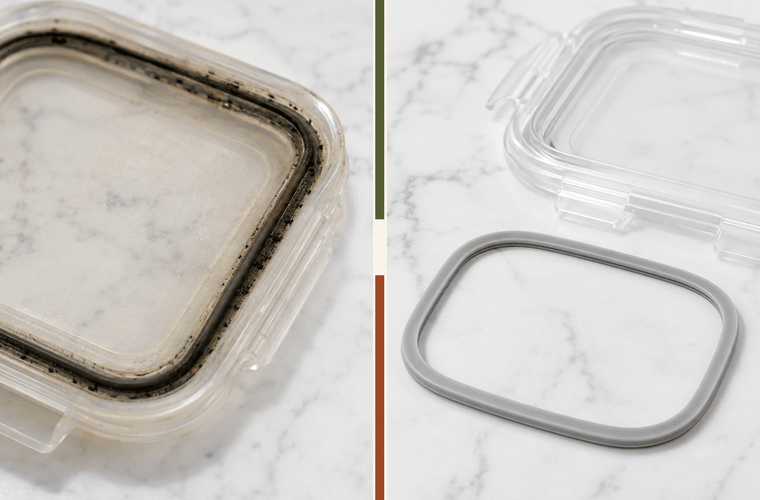
The silicone gasket is the rubber ring inside the lid that creates the airtight seal. It fails before anything else in the container system. Replace it when it feels stiff or hard, shows visible cracks, retains food smells after washing, has yellow or brown discoloration, or shows black spots from mold. |
Press the gasket with your finger. Fresh silicone springs back immediately. A gasket that resists, stays compressed, or feels hard has lost its elasticity. Stiff silicone cannot press flat against the glass rim with enough force to create a seal. Your food is sitting in a container that is no longer truly airtight.
Persistent odor is the sign most people miss. If the gasket still smells like garlic or curry after washing, bacteria have colonized inside the silicone structure itself. That odor cannot be washed out — it is a sign of material breakdown, not surface residue. Replace the gasket.
Yellow or brown discoloration means UV exposure and heat have degraded the silicone chemistry. The gasket looks cosmetically worn because it is chemically degraded. For a full walkthrough of how to clean the gasket groove and diagnose whether cleaning can extend the seal life, see how to deep clean your glass containers.
If the gasket has failed but the glass body is intact, you do not need to replace the whole set. A glass container lid that is not sealing properly covers what can be fixed versus what needs replacing.

When to Replace the Lid — Not Just the Container
|
The glass body of a borosilicate container can last 10 or more years undamaged. The lid wears out first. Replace the lid when it is visibly warped, when it no longer sits flat on the glass rim, or when any of the four locking clips are broken or no longer snap shut. A lid that does not click is a lid that does not seal. |
Warped lids are almost always caused by the dishwasher. Plastic lid components placed on the bottom rack sit close to the heating element. Over dozens of cycles, the plastic frame distorts slightly. The lid still looks like a lid but it no longer creates even contact with the glass rim. Food stored under that lid goes stale faster and is exposed to bacteria from the surrounding air.
Glass container lid not sealing the way it used to? Check whether the lid sits completely flat with no visible gap when placed on the container. Run your finger around the rim edge with the lid on. Any spot where you can feel a gap or lift is a seal failure point. A lid that passes the flat test but still does not feel right probably has a gasket issue rather than a warp issue.
Broken clips are the clearest replacement signal. The 4-tab locking system works only when all four clips engage. One broken clip means the opposite side of the lid lifts slightly on every open-close cycle. The seal is unreliable. Replace the lid, not the container.
|
Razab Replacement Lids If your glass container body is intact but the lid has failed, Razab replacement lids are available separately. BPA-free, silicone gasket included, available in multiple sizes. No need to replace the whole set. |
Browse glass food storage containers with lids if you need both the glass body and a fresh lid together.

How Long Do Glass Containers Actually Last?
|
The glass body of a high-quality borosilicate container lasts 10 to 20 years or more with no physical damage. Glass does not degrade with use. It does not absorb smells, stain permanently, or become chemically unsafe over time. The lid and gasket typically need replacing every 1 to 3 years depending on how often the container goes through the dishwasher. |
Is it safe to use old glass containers?
The age of the glass is not the issue. A 10-year-old container with an undamaged rim, intact body, and working lid is perfectly safe. What makes a container unsafe is physical damage: chips, cracks, or a failing seal system.
Do glass containers degrade over time?
The glass body does not. What shortens overall container life is how the lid and gasket are treated. Hand-washing lids extends their lifespan significantly. The dishwasher's high-heat drying cycle is the primary cause of gasket stiffness and lid warping. A container that is hand-washed consistently can have its original lid last 3 to 5 years rather than 1 to 2.
Signs of Thermal Damage — When Heat Has Weakened Your Glass
|
Thermal damage happens when glass moves through extreme temperature changes too fast. The most common cause is going from a cold fridge directly into a hot microwave without allowing the glass to adjust. Signs include hairline cracks visible under good light, cloudy patches on the glass surface that do not wash off, and a rim that feels rough or uneven when you run your finger along it. |
Glass container safe to use after a thermal shock crack? No. A hairline crack looks minor but it is the beginning of a structural failure. The crack expands with every subsequent temperature change. Run a fingernail slowly along the glass surface under good light. A hairline crack catches the nail slightly. That catch is the reason to retire the container now rather than after it shatters in the microwave.
Cloudy patches that do not disappear after a vinegar soak are a different problem from hard water deposits. Hard water cloudiness responds to acid. Internal stress from repeated thermal shock creates a cloudy appearance in the glass structure itself. If the cloudiness persists after a 20-minute white vinegar soak, the glass has been weakened from within.
Does the dishwasher damage glass containers over time? The dishwasher is safe for the glass body. What the dishwasher damages is the lid and gasket. The heat and water pressure are not extreme enough to cause thermal shock in borosilicate glass. Rapid temperature changes outside the dishwasher, like pulling a frozen container and immediately microwaving it, are the real cause of thermal stress damage. Removing smells, stains, and haze from glass containers covers the difference between surface cloudiness and structural damage.

Quick Safety Checklist — Run This on Every Container
|
What to Check |
Safe to Use |
Replace Now |
|
Glass rim |
Smooth, no rough spots |
Any chip, no matter how small |
|
Glass body |
No visible lines or cracks |
Any crack, including hairline |
|
Silicone gasket |
Soft, flexible, odor-free |
Stiff, cracked, smelly, or discolored |
|
Lid |
Sits flat, clicks shut firmly |
Warped, gaps visible, clips loose |
|
Lid clips |
All 4 snap and hold |
Any clip broken or does not engage |
|
Glass surface texture |
Smooth rim all around |
Rough or uneven spots on the rim |
FAQs
Can I use a glass container if only the lid is damaged but the glass is fine?
Yes. The glass body is the durable part. A damaged lid does not make the glass unsafe to use — it just means the container is no longer airtight. Replace the lid and the container is fully functional again. Razab replacement lids are available separately.
How do I check my glass containers for safety?
Run a fingernail slowly around the rim under bright light. Check the gasket by pressing it with your finger — it should feel soft, not hard. Place the lid on the container and look for any visible gaps around the edge. That three-step check covers the main failure points.
Does borosilicate glass last longer than regular glass?
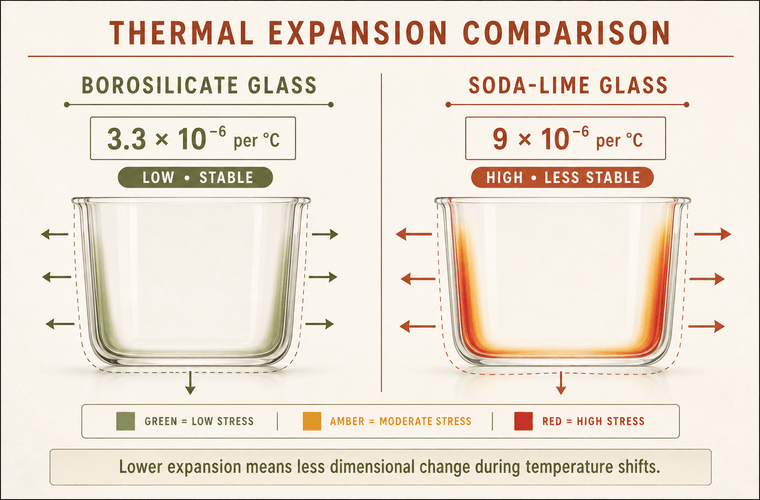
Yes. Borosilicate glass has a lower thermal expansion rate than soda-lime glass, which means it handles temperature changes without cracking. Standard soda-lime glass fails under thermal stress that borosilicate handles without damage. It is why quality glass storage containers for food are made from borosilicate.
Can I replace just the lid on my glass container?
Yes, and this is often the right move. The glass body almost never fails before the lid. Replacing only the lid saves the cost of a full container set and produces less waste. Check that the replacement lid matches your container's dimensions before ordering.
How often should I replace the silicone gasket?
Every 1 to 2 years with regular dishwasher use. Every 2 to 3 years with hand-washing. The gasket press test tells you when it is time: if the silicone feels hard rather than soft and springy, do not wait for a visible crack. See what to do when a glass container lid stops sealing for full gasket diagnosis steps.
Is it safe to use a glass container that has gone cloudy?
It depends on the cause. Hard water cloudiness is cosmetic and safe — it responds to a white vinegar soak. Cloudiness that does not clear after vinegar treatment indicates internal stress damage in the glass structure. That container should be retired.
The Glass Is Probably Fine — Check the Lid First
Most glass food storage containers get thrown out when the lid fails, not the glass. The borosilicate glass body of a container that has been properly used can last longer than most kitchens. The lid and gasket are the parts that need attention.
Run the checklist once a year. Check the rim, press the gasket, test the clip. Five minutes per container tells you exactly what needs replacing and what does not.
If the glass is intact and only the lid has failed, replacement lids are available at razab.com. Replace the lid. Keep the glass.
|
About the Author This guide was produced by the Razab Product Research Team. We stress-tested borosilicate glass containers through 300 dishwasher cycles and repeated freezer-to-microwave transitions to identify exactly at what point lids, gaskets, and clips fail while the glass body remains structurally sound. Our mission is to help families reduce food waste through better storage science. |
Conversation
Join the discussion