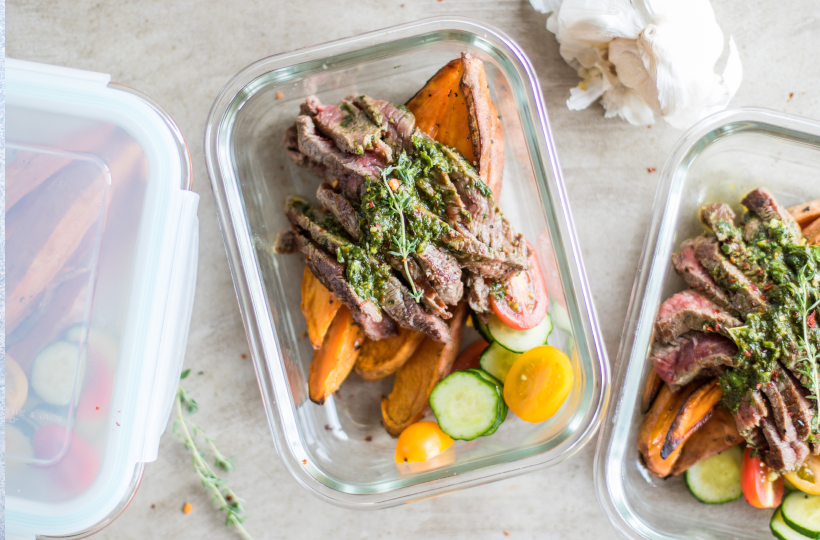

You must have seen these labels - BPA-free, Food-safe, Non-toxic since they are on half the food storage containers in the stores.
But here's the problem: those labels don't mean what most people think they mean. And once you understand what's actually behind them, you'll never look at a plastic container the same way.
This guide breaks down what non-toxic food storage really means, what the science says, what to look for, and how to choose containers you can actually trust for your family.

What Does Non-Toxic Food Storage Actually Mean?
Non-toxic food storage means using containers made from materials that don't release harmful chemicals into your food -- at any temperature, under any condition.
That sounds simple. But the tricky part is that non-toxic isn't a regulated term. Any brand can put it on a label without meeting a specific safety standard. The same goes for natural, eco-friendly, and food-safe.
The only label that carries real legal weight is FDA approval. The FDA evaluates food contact materials and classifies the safest ones as GRAS which means Generally Recognized as Safe. Glass holds this classification. Most plastics don't.
Here's what that means for your kitchen: a container that's truly non-toxic won't leach chemicals into your food when it's heated, frozen, washed repeatedly, or scratched. That's the bar. And not many materials clear it.

The Problem with BPA-Free
Is BPA-free plastic actually safe?
Not necessarily. BPA-free is one of the most misunderstood labels in kitchen products. Removing BPA doesn't make a plastic container safe, it just removes one chemical from a long list.
When brands reformulated to remove BPA after consumer pressure in the early 2010s, many replaced it with BPS (bisphenol S) and BPF (bisphenol F). Both chemicals behave similarly to BPA in the body. A 2019 study published in Environmental Health Perspectives found BPS may be just as disruptive to hormones as BPA, possibly more so in some conditions.
The Environmental Working Group (EWG) has flagged multiple BPA replacement chemicals as inadequately tested for long-term safety in humans.
So when you see BPA-free on a plastic container, the honest read is: We removed one chemical we got in trouble for. We can't tell you much about what replaced it.
That's not the same as non-toxic.
Did You Know? The FDA banned BPA in baby bottles and sippy cups in 2012 -- but only after manufacturers had already voluntarily removed it due to consumer pressure. BPA is still permitted in many other food contact plastics.

What Actually Makes a Container Non-Toxic?
A genuinely non-toxic food container meets three criteria:
Inert material -- it doesn't react with food. Glass is chemically inert. It doesn't interact with acidic foods (tomato sauce, citrus), fatty foods (oils, cheese), or hot foods. It doesn't absorb odors or stains. What you put in comes out exactly as it went in. Most plastics are not inert -- they can leach plasticizers, stabilizers, and colorants, especially when exposed to heat, acidic foods, or physical wear.
No migration at temperature extremes. A safe container should behave the same whether it's holding frozen soup at -4°F or being reheated at 212°F. According to the FDA, glass has no known chemical migration at any temperature. That's a claim very few materials can make.
Durability without degradation. Plastic containers degrade over time. Scratches, cloudiness, and warping aren't just cosmetic, they're signs the material is breaking down. A container that looks old is often releasing more chemicals than a new one. Glass doesn't degrade this way. A two-year-old glass container is chemically identical to a new one.

The Materials Ranked: From Safest to Most Concerning
|
Material |
FDA GRAS? |
Leaches chemicals? |
Safe when heated? |
Longevity |
|
Glass (borosilicate / tempered) |
Yes |
No |
Yes |
Years -- no degradation |
|
Stainless steel (food-grade 304/316) |
Yes |
No (if uncoated) |
Not microwave safe |
Years |
|
Ceramic (lead-free, food-grade glaze) |
Yes |
No (if certified) |
Yes |
Years if unchipped |
|
Silicone (food-grade) |
Generally yes |
Minimal, if any |
Yes |
Years |
|
Polypropylene (PP, #5 plastic) |
Conditionally |
Low -- but not zero |
Not recommended |
1-2 years |
|
Polyethylene (HDPE, #2 plastic) |
Conditionally |
Low |
Not recommended |
1-2 years |
|
Polycarbonate (#7 plastic) |
No -- contains BPA |
Yes -- when heated |
No |
Avoid |
|
Polystyrene (PS, #6 plastic) |
No |
Yes -- styrene leaches |
No |
Avoid |
Glass sits at the top of this list for everyday food storage -- combining FDA GRAS status, zero chemical migration, microwave safety, and decades of durability in one material.
What to Look For on a Label (A Practical Checklist)
When you're evaluating a food storage container, here's how to read past the marketing:
-
Look for FDA GRAS classification. For glass, this is automatic. For plastics, it's conditional and depends heavily on use conditions.
-
Check the resin code on plastic. #2 (HDPE) and #5 (PP) are the least problematic plastics for cold storage. Avoid #3 (PVC), #6 (PS), and #7 (other/PC) entirely for food contact.
-
BPA-free alone is not enough. Ask what replaced the BPA -- or skip the question by choosing glass.
-
Look for third-party certifications. NSF International and California Prop 65 compliance are signs a brand has had its materials independently tested.
-
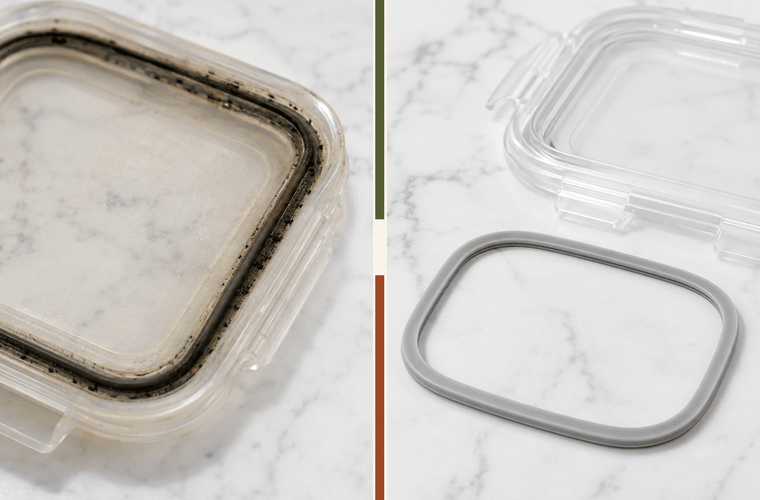
Check the lid material separately. The lid contacts food too, especially the underside. Look for silicone seals and PP or HDPE lid bodies -- not polycarbonate.
-
Avoid scratched or cloudy plastic containers. Visible wear signals chemical degradation. Replace them.
Razab's glass food storage containers are made from food-grade glass with no BPA, no BPS, and no chemical coatings. The lids use food-safe silicone gaskets and PP bodies, materials that score at the low end of the risk scale. As featured in Food Network, Better Homes & Gardens, and The New York Times, Razab has been trusted by over 10 million American families for exactly this reason: no shortcuts on materials.
See Razab's glass food storage containers
The Specific Kitchen Habits That Increase Your Risk
Knowing which materials are safer is step one. Knowing which habits increase risk is step two. These are the most common ways chemical migration happens in a home kitchen -- even with supposedly safe containers:
-
Heating food in plastic containers. Even microwave-safe plastic means the container will not melt or deform -- not that it will not leach chemicals. Heat accelerates chemical migration. A NIH-cited study found polypropylene containers released hundreds of chemicals when microwaved with food.
-
Using plastic containers for acidic foods. Tomato sauce, lemon juice, vinegar-based dressings -- these pull plasticizers out of containers faster. Store acidic foods in glass whenever possible.
-
Putting old or scratched plastic in the dishwasher. Dishwasher heat combined with detergent chemicals accelerates plastic degradation. A container that went through 200 dishwasher cycles is not the same container it was when new.
-
Storing fatty foods in plastic long-term. Fats are particularly good solvents for plasticizers. Olive oil, cheese, and nut butters increase migration when stored in plastic for extended periods.
-
Using plastic wrap directly on hot food. Cling wrap is made from PVC or low-density polyethylene. Both can release chemicals when in direct contact with hot food. Use a glass lid or let food cool before covering.

How Glass Handles Every One of These Scenarios
Glass is chemically inert. It doesn't have plasticizers to migrate. It doesn't degrade when heated, washed, or scratched. Acidic foods and fats don't pull anything out of it.
You can microwave food in a glass container every day for five years, and the container's chemical properties on day 1,825 are identical to day one.
That's not a marketing claim -- it's the reason the FDA classifies glass as GRAS with no conditional restrictions on use.
The practical impact: you stop tracking which container is safe for which food at which temperature. Everything goes in glass, and you don't think about it again.
Razab's glass containers are designed for exactly this kind of everyday use, dishwasher-safe, freezer-to-microwave ready, and built to maintain a proper airtight seal through years of daily use. Over 50,000 five-star reviews from real customers reflect what that looks like in real kitchens.
Shop glass food storage containers from Razab

FAQs
Is BPA-free food storage actually safe?
Not automatically. BPA-free means one chemical was removed, often replaced by BPS or BPF, which raise similar concerns. BPA-free is a starting point, not a finish line. The safest choice is a material that doesn't contain bisphenols at all, like glass.
What is the safest food storage material?
Glass is the safest material for everyday food storage. It's FDA GRAS, chemically inert at all temperatures, and doesn't degrade over time. Stainless steel and food-grade ceramic are strong alternatives for specific uses.
What does food-safe mean on a label?
Food-safe is not a regulated term in the US. Any brand can use it. Look instead for FDA GRAS classification, NSF certification, or specific resin codes (#2 or #5 for plastics in cold storage only).
Are glass containers with plastic lids safe?
Generally yes, if the lid uses PP (#5) or HDPE (#2) with a food-grade silicone gasket. Avoid polycarbonate lids. The lid contacts food, especially the underside so material matters there too.
How do I know if my plastic containers are still safe?
If they are scratched, cloudy, warped, or retaining odors, replace them. All of those signs indicate the material is breaking down, which increases the likelihood of chemical migration into your food.
Do I need to replace all my plastic containers at once?
No. Start with the containers you heat food in, those carry the highest risk. Swap those to glass first. Then work through cold storage containers over time as budget allows.
The Takeaway
Non-toxic on a label means nothing without context. BPA-free means one chemical was removed, not that the container is safe. Food-safe isn't regulated at all.
The containers that are genuinely non-toxic are the ones made from inert materials that don't react with your food ever. Glass is the clearest example. The FDA agrees. So do the millions of families who've made the switch and never looked back.
If you're not sure where to start, begin with what you heat. Replace your microwave containers with glass first. Go from there.
See Razab's full range of glass food storage containers
Related reading:
Conversation
Join the discussion