
|
Glass containers are safer and more durable than plastic for most foods but not all. The five situations where glass creates real problems: carbonated liquids under pressure, cut raw onions stored long-term, hot acidic foods transferred directly into cold glass, sealed glass in the microwave with a tight lid, and any food you plan to shake or toss in the container. Each has a specific reason and a specific fix. |
Glass containers are better than plastic for almost everything. No BPA. No microplastic risk. No odor absorption after a week of leftover curry. They go from fridge to oven to dishwasher without degrading.
But glass is not the right choice for every food in every situation. There are five specific cases where storing food in glass creates a real problem, a ruined meal, a pressure incident, or a container that transfers last week's smell to this week's lunch. Most people get at least one of these wrong. Razab glass food storage containers with lids are built to handle the widest possible range of foods — but knowing the exceptions makes the system work better.
Here is the exact list, with the science behind each one and what to do instead.

The 5 Foods That Do Not Belong in Glass Containers
1. Carbonated Drinks
Carbonated beverages build pressure inside a sealed container as CO2 continues to come out of solution. Glass handles compression well but is vulnerable to sudden pressure release — when you open a sealed glass container that has been building CO2, the pressure releases fast. The result is either a dramatic spill or, in a compromised container, a lid that pops off with force.
This is not a glass quality problem. It is a pressure problem. Any sealed rigid container — glass or thick plastic — creates this risk with carbonated liquids. The original bottle is pressure-rated and designed specifically for this use. A food storage container is not.
|
1. Stop: Carbonated drinks in sealed glass containers Problem: CO2 pressure builds inside any sealed rigid container — lid can pop or liquid sprays on opening Fix: Keep carbonated drinks in their original sealed bottles. If you need to store an opened sparkling water or soda, use a bottle with a resealable cap, not a flat-lid container. |

2. Cut Raw Onions for Extended Storage
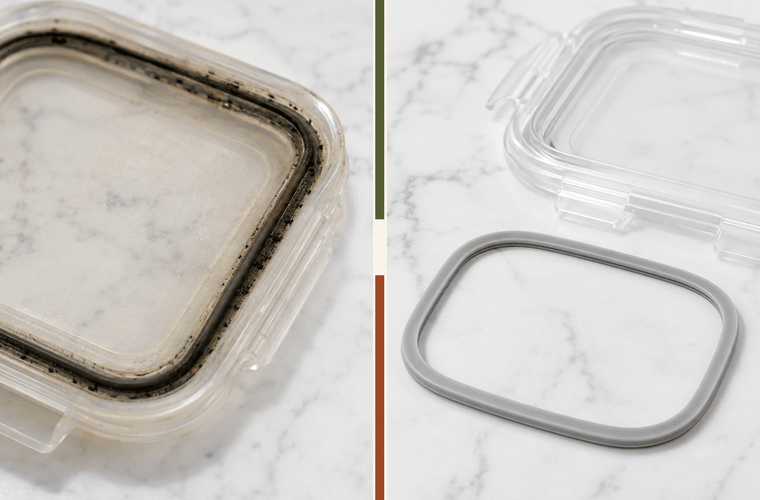
Cut raw onions produce sulfur compounds — the same volatile molecules that make your eyes water. In a sealed glass container, those compounds have nowhere to go. They absorb slowly into the glass surface over repeated storage cycles, and more immediately, they permeate the silicone gasket in the lid.
The practical result: store cut onions in a glass container once and the next three things you store in that container smell faintly of onion. The glass itself is not permanently damaged, but the silicone seal holds the sulfur compounds for a long time even after washing.
Cooked onions are a different story. Cooking breaks down the sulfur compounds that cause the problem. Caramelized onions, cooked stir-fry onions, and any onion that has been heated thoroughly can be stored in glass without any transfer issue.
|
2. Stop: Cut raw onions for multi-day storage in glass Problem: Sulfur compounds from raw onions absorb into the silicone lid seal and transfer to the next food stored in the same container Fix: Store cut raw onions in a zip bag or a dedicated plastic container you use only for onions. Use glass for cooked onions freely — cooking neutralizes the sulfur compounds that cause the problem. |

3. Hot Acidic Food Transferred Directly into Cold Glass
Acidic foods themselves are not the problem. Tomato sauce, citrus-based marinades, and vinegar-heavy dressings store perfectly well in glass at room temperature or in the fridge. The issue is the combination of hot acidic liquid and a temperature differential between the food and the container.
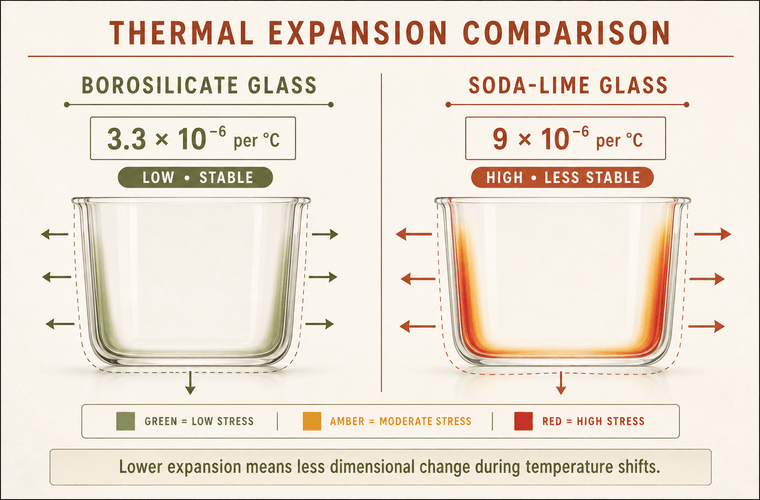
When hot acidic liquid hits cold glass, the thermal shock is amplified by the acid. Standard soda-lime glass and some tempered glass can crack or craze under this combination even when the glass looks fine afterward. Hairline crazing that is invisible to the naked eye creates weak points that fail later under pressure or impact.
Borosilicate glass handles this better than standard glass because its low thermal expansion coefficient means it barely changes shape under temperature stress. This is the same property that makes borosilicate the only glass type that reliably survives repeated freezer use, as Food & Wine confirmed in their borosilicate glass breakdown — the thermal shock resistance is a genuine engineering advantage, not a marketing claim.
|
3. Stop: Hot acidic food transferred directly into cold glass Problem: Thermal shock amplified by acid creates invisible crazing in standard glass — weak points that fail later Fix: Cool hot acidic food to room temperature before transferring to any glass container. Borosilicate glass handles this better than standard glass, but the safest habit is cooling first regardless of glass type. |

4. Anything You Plan to Microwave with the Lid Fully Sealed
Glass is microwave safe. The food inside, however, produces steam as it heats. Steam needs somewhere to go. In a fully sealed glass container with a tight-fitting lid, steam pressure builds as the food heats and when it reaches the point where it overcomes the lid seal, it releases suddenly. The lid pops, the food sprays and at minimum you have a microwave to clean.
This is not a glass problem. It is a sealed container problem that applies equally to glass and plastic. The fix is the same for both: loosen the lid before microwaving, or remove it entirely and replace it with a paper towel or microwave-safe plate to contain splatter while allowing steam to escape.
Razab lids have a vent design specifically for this use case. Open the vent before microwaving and the steam escapes in a controlled way without pressure buildup. The lid stays on and the food stays in the container. Seal the vent before putting the container back in the fridge.
For more information: click
|
4. Stop: Microwaving glass containers with the lid fully sealed Problem: Steam pressure builds inside any sealed container under microwave heat — lid pops and food sprays Fix: Loosen the lid, remove it, or use the vent on vented lids before microwaving. This applies to all sealed containers — glass and plastic equally. |

5. Salad Dressings and Anything You Plan to Shake
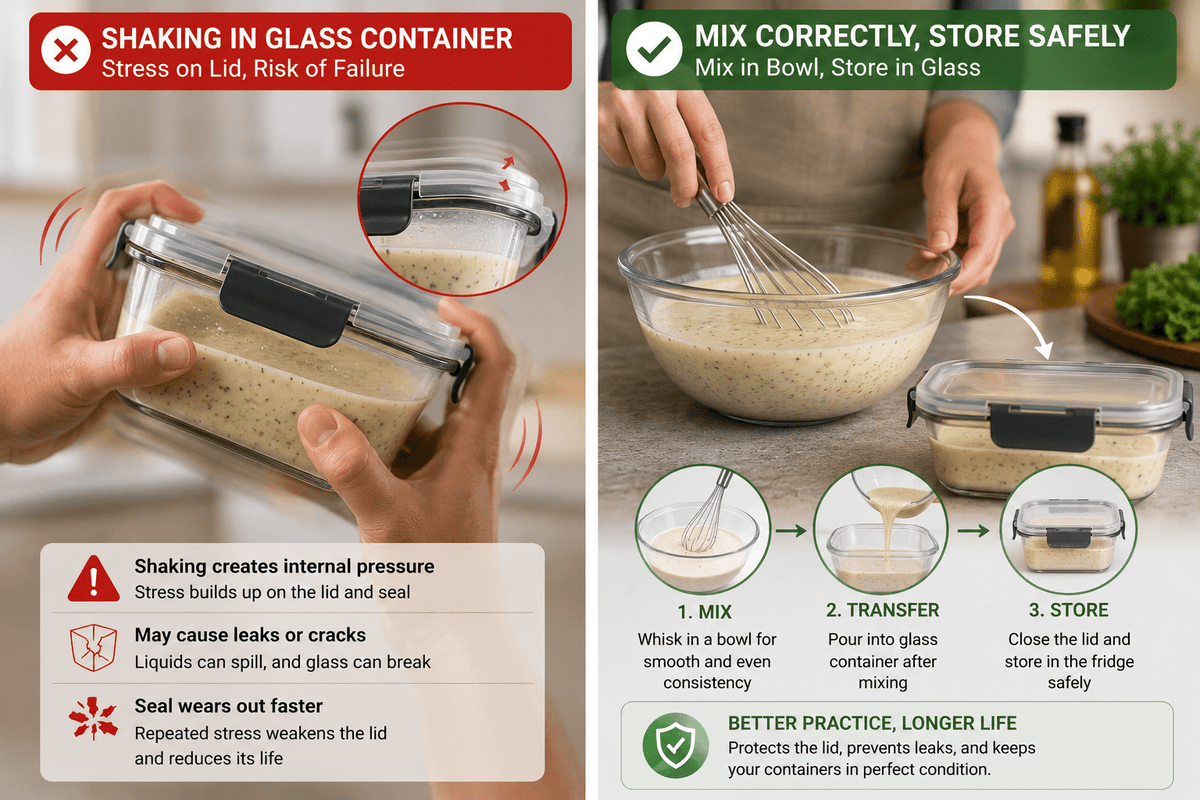
Glass containers work well for storing salad dressings. They do not work well as the vessel you shake the dressing in before using it. Glass is heavier than plastic, which means the centrifugal force during shaking is greater, putting more stress on the lid seal. More importantly, most glass container lids are designed for an airtight static seal — not for the repeated flex and force of a vigorous shake.
The lid seal on a glass container is created by the silicone gasket sitting flat under even pressure from the closed lid. Shaking creates uneven pressure as the liquid slams against the lid from the inside. Over repeated shaking cycles, this can degrade the gasket seal faster than normal use.
The fix is simple and takes ten seconds: mix or shake in a jar or bowl designed for mixing, then transfer to the glass container for storage. The glass container keeps it fresh in the fridge for days. The mixing vessel does the job it is designed for.
|
5. Stop: Foods you plan to shake vigorously inside the container Problem: Shaking creates uneven pressure on the lid seal — degrades the gasket faster than static storage use Fix: Mix dressings and sauces in a separate mixing jar or bowl, then transfer to glass for fridge storage. The glass container preserves freshness. Let a different vessel handle the mixing. |

Quick Reference: What Not to Store in Glass Containers
Every situation above has a specific cause and a specific fix. Here is the full summary:
|
Food |
Why Glass Creates a Problem |
What to Do Instead |
|
Carbonated drinks |
CO2 pressure builds inside sealed glass — risk of pressure failure or spill when opened |
Use the original sealed bottle or a pressure-rated vessel |
|
Raw onions (cut) |
Onion sulfur compounds absorb into glass over time and transfer to the next food stored |
Use plastic or seal in the original skin — glass for cooked onions only |
|
Acidic foods stored hot |
Thermal shock risk when hot acidic liquid hits cold glass — standard glass only, borosilicate is safe |
Cool to room temperature first, then transfer to borosilicate glass |
|
Food intended for the microwave with tight lid sealed |
Steam pressure builds under a fully sealed glass lid — lid can pop or contents spurt |
Loosen or remove the lid before microwaving, or vent it |
|
Anything you plan to shake or toss in the container |
Glass is heavier and less forgiving than plastic for shake-and-mix use — lid seal can fail under force |
Mix or toss in a bowl, then transfer to glass for storage |
What Glass Containers Are Actually Better for Than Anything Else
|
Glass outperforms plastic for every food that is stored for more than two days, reheated regularly, contains strong flavors or odors, or will be transferred from fridge to oven. The five exceptions above are narrow and specific. The list of foods where glass is the clear winner is much longer. |
Foods with strong flavors — curries, garlic-heavy dishes, spiced meats, fermented foods — store in glass without any flavor transfer to the next thing stored in the same container. Plastic absorbs volatile flavor compounds at the molecular level. Glass does not. A glass container that held tikka masala last Tuesday holds plain rice this Tuesday without any cross-contamination.
Foods that go from fridge to oven work in borosilicate glass without any transfer between vessels. Marinate in the glass container in the fridge, pull it out, let it come close to room temperature, and put it directly in the oven. Razab's glass meal prep containers are rated for oven use at 400 degrees Fahrenheit specifically for this workflow, one container handles the full process from fridge to oven to table.
Long-term storage of any liquid, sauce, or high-moisture food benefits from glass because glass does not absorb moisture or degrade the airtight seal over time the way plastic does. The same silicone gasket in a glass lid that seals day one seals the same way at month six. Plastic containers with snap-fit or press-fit lids lose their seal integrity faster because the plastic housing itself changes shape slightly over repeated heating and cooling cycles.

Glass Container Myths Worth Clearing Up
Myth: Acidic food damages glass over time
Not true for borosilicate glass at normal food storage concentrations. Vinegar, citrus juice, tomato sauce, and fermented foods at food-grade acidity levels do not etch or damage borosilicate glass surfaces. The concern about acid and glass applies primarily to industrial glass etching processes using hydrofluoric acid, not the acidity level of salad dressing or kimchi. Store acidic foods in glass freely, just cool hot versions first.
Myth: Glass leaches chemicals into food like plastic does
Glass is chemically inert at food storage temperatures. It does not release compounds into food under any normal storage condition, room temperature, refrigerator, or oven use within rated temperatures. This is the core reason glass is recommended over plastic for long-term storage of foods, particularly those with high fat content that accelerate plastic compound absorption.
Myth: You cannot store raw meat in glass
You can. Raw meat stores safely in glass containers in the fridge for the same timeframes it would store in any food-safe container. The advantage of glass for raw meat is that it does not absorb the meat's odor compounds, which plastic does over time. The one consideration: transfer raw meat to glass carefully and seal the container fully before refrigerating to prevent cross-contamination. FDA food storage guidelines apply equally to glass and plastic, the container material does not change the safe storage timeframe.
Myth: Hot food always cracks glass
Hot food cracks standard glass, not borosilicate glass. Borosilicate's low thermal expansion coefficient means it barely changes shape under temperature stress. You can transfer hot soup into a Razab glass container without cracking it. The rule to follow: cool extremely hot food slightly before sealing the lid to avoid steam pressure buildup, and avoid moving borosilicate glass directly from a very cold surface to a very hot one in rapid succession.
FAQs
What should you not store in glass containers?
Carbonated drinks under pressure, cut raw onions for extended periods, hot acidic food transferred directly into cold glass, any food microwaved with the lid fully sealed, and foods you plan to shake vigorously inside the container. Each creates a specific problem pressure buildup, odor transfer, thermal shock, steam pressure, or lid seal degradation that does not apply to standard food storage use.
Can you store acidic food in glass containers?
Yes. Acidic foods like tomato sauce, citrus-based marinades, vinegar dressings, and fermented foods store safely in glass. The one caution: do not transfer hot acidic food directly into cold glass let it cool to room temperature first to avoid thermal shock. Borosilicate glass handles temperature stress better than standard glass, but cooling first is the safest habit regardless.
Why does my glass container smell like onions?
Raw onions produce sulfur compounds that absorb into the silicone gasket of the lid during storage. The gasket holds those compounds even after washing which transfers the smell to the next food stored in the same container. Store cut raw onions in a dedicated plastic container or bag. Cooked onions do not cause this problem because cooking breaks down the sulfur compounds.
Is it safe to microwave food in a sealed glass container?
No. Steam pressure builds inside any fully sealed container under microwave heat and releases suddenly when it overcomes the seal. Loosen the lid, remove it entirely or use the vent on vented lids before microwaving. This applies equally to glass and plastic containers, the issue is the sealed lid, not the container material.
Does glass leach chemicals into food?
No. Glass is chemically inert at food storage temperatures. It does not release compounds into food under any normal storage condition, room temperature, refrigerator or oven use within rated temperatures. This is the primary advantage of glass over plastic for long-term food storage, particularly for fatty foods that accelerate the absorption of plastic compounds.
Can you put glass containers in the freezer?
Yes, if the glass is borosilicate. Borosilicate glass has a low thermal expansion coefficient that prevents cracking under repeated freeze-thaw cycling. Standard tempered glass can crack under repeated freezer use. Razab's borosilicate glass food storage containers are rated for freezer use specifically because of this material property. Standard soda-lime glass should not be frozen.
Glass is the better choice for almost every food storage situation. The five exceptions above are specific and manageable — once you know them, none of them requires avoiding glass. They just require a small adjustment in how you use it.
No carbonated drinks. Cooked onions only. Cool hot acidic food first. Vent or loosen the lid before microwaving. Mix before storing, not in the storage container. That is the full list of glass container rules that actually matter.
|
About the Author This post was produced by the Razab Product Research Team. We tested each of these food and container combinations in our lab to confirm which use cases create real problems and which are myths — so our customers know exactly when glass is the right choice and when it is not. Our mission is to help families reduce food waste through better storage science. |
Conversation
Join the discussion