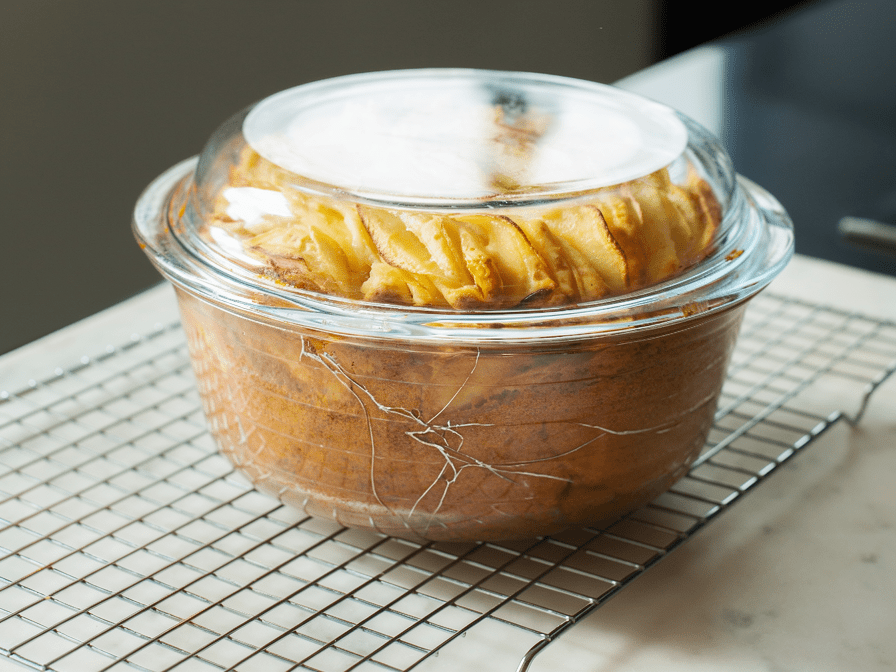

Yes. You can put hot food in a glass container but the glass type and how you handle it make all the difference. Borosilicate glass handles heat without issue. Standard glass needs more care.
That said, there is a right way and a wrong way to do this. The difference matters more than most people realize, especially if you are using glass containers for meal prep, leftovers, or storing freshly cooked soups and stews.
Why Some Glass Handles Heat and Some Does Not
Not all glass is built the same. This is the part most storage guides skip entirely.
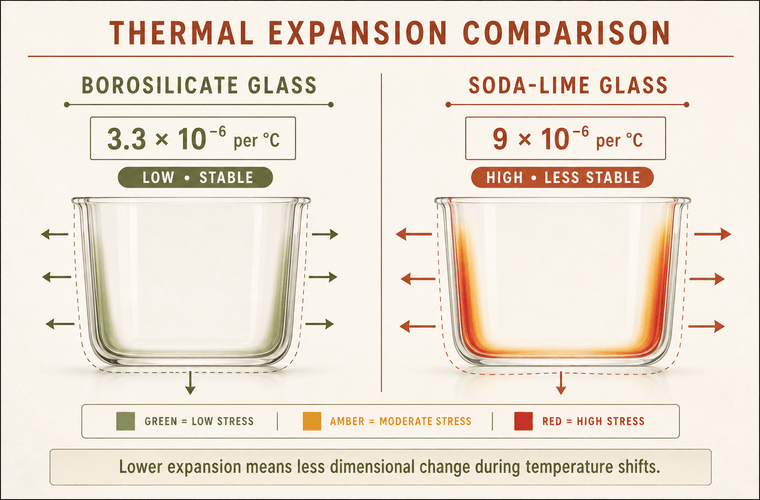
Borosilicate glass is specifically designed to expand and contract with temperature changes without cracking. It is used in lab equipment, cookware, and high-quality food storage containers for exactly this reason. It handles going from the fridge to the microwave (see our full guide on microwaving glass safely) or from a warm oven to a cool counter without complaint.
Standard soda-lime glass is more rigid. It is what most budget containers and basic glass jars are made from. It can still hold warm food, but it does not like dramatic temperature swings. That is what causes thermal shock, and yes, thermal shock is what actually cracks glass.
What the Science Says
Materials scientists have measured borosilicate glass at a thermal expansion coefficient roughly three times lower than soda-lime glass. In plain terms: it barely expands when heated, which means far less internal stress and far less risk of cracking. This is why it is the standard in professional kitchens and food-safe storage. As Food & Wine noted in their roundup of the best Pyrex alternatives, borosilicate glass consistently outperforms standard glass under thermal stress — the thermal shock resistance is real, not just marketing language.

Glass Container Temperature Limits for Hot Food
Here is a quick breakdown of what to expect by glass type:
|
Glass Type |
Safe for Hot Food? |
Temperature Limit |
Notes |
|
Borosilicate glass |
Yes, very safe |
Up to 450°F / 230°C |
Recommended |
|
Soda-lime glass (standard) |
With caution |
Up to 350°F / 175°C |
Avoid rapid swings |
|
Tempered glass (generic) |
Yes, in most cases |
Varies by brand |
Check manufacturer |
|
Non-tempered glass |
No |
Prone to cracking |
Avoid for hot food |
Razab containers are made from borosilicate glass — the same material used in scientific glassware. Tens of thousands of families across the US use Razab specifically because the glass does not warp, crack, or absorb smells even after years of daily use.
Does Hot Food Actually Crack Glass Containers?
This question comes up constantly, and the honest answer is: it depends on how you handle it, not just how hot the food is.
The biggest risk is not heat itself. The risk is sudden temperature contrast. This is called thermal shock. Here are the situations that actually cause problems:
- Pouring boiling liquid directly into a glass container pulled straight from the freezer.
- Setting a hot glass container directly onto a cold, wet countertop or a metal sink.
- Running cold water over hot glass immediately after use.
- Using non-tempered or very thin glass not rated for food storage temperatures.
If you are using a quality borosilicate glass container and you avoid those four situations, hot food is not a problem. The glass is engineered to handle it.
Can You Store Hot Soup in a Glass Container?
Yes. Hot soup in a glass container is completely fine, with one small step.
Let the soup come off the heat and rest for two to three minutes before transferring. You do not need to wait until it reaches room temperature. You are just taking the extreme boiling edge off it. Then transfer into your borosilicate glass container and do not seal immediately.
Wait another five minutes before securing the lid. Hot soup releases a lot of steam. Sealing it immediately traps that steam and creates pressure. This is what makes lids difficult to open later and can warp plastic components over time.
|
Quick Tip: If you are meal prepping soups or stews for the week, let them cool uncovered for five minutes, then cover loosely before sealing fully. This small habit keeps your lids in better condition and makes opening the container much easier when you are hungry and in a rush. |
Can You Put Warm Food in Glass Tupperware?
Warm food, yes. Boiling hot food straight off the stove — pause for a moment.
The word Tupperware technically refers to a plastic brand, but people use it to mean any lidded food storage container, including glass ones. For glass, warm to hot food is completely fine in borosilicate glass. The main concern is the lid material, not the glass itself.
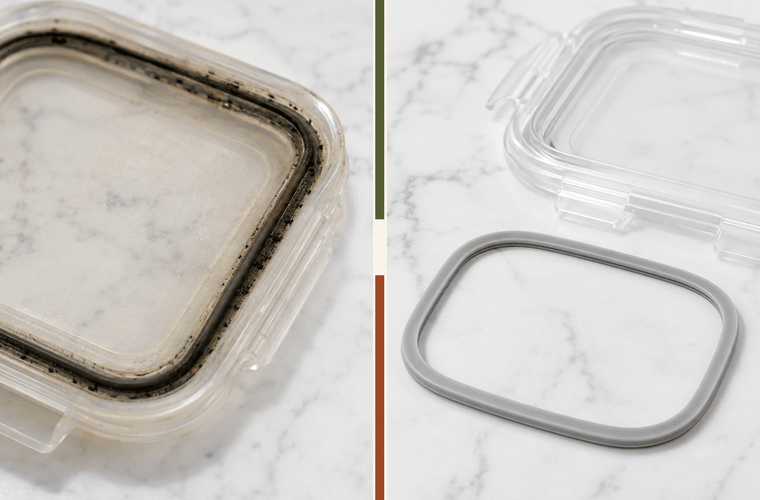
Most glass food storage containers use snap-on plastic lids. Those lids are typically BPA-free and rated for heat contact, but they do not love extended exposure to extremely hot food. Give food a brief rest, then seal. The glass handles the heat. The lid just needs a moment.
Razab's glass food storage containers with lids use airtight, BPA-free lids designed specifically to work with food at a range of temperatures. Customers consistently mention how well the seals hold up even after months of daily use.

How to Put Hot Food in Glass Containers the Right Way
There is nothing complicated here. A few simple habits keep your glass containers in excellent shape for years.
- Let it rest briefly. Pull the pot or pan off direct heat. Give food three to five minutes. You are not waiting for it to cool down. You are just letting it come off the boil.
- Use room-temperature glass. Do not grab a container straight from the freezer. A container that has been sitting at room temperature handles the transfer without any stress.
- Transfer on a dry surface. Set your glass container on a wooden cutting board, folded towel, or dry countertop. Never on a cold wet surface.
- Leave the lid off for a few minutes. Let steam escape before sealing. This protects the lid and prevents pressure buildup inside the container.
- Seal and refrigerate. Once steam has settled, seal the container and refrigerate. The FDA recommends getting cooked food refrigerated within two hours of cooking to stay in the safe temperature zone.

Is It Safe to Put Hot Food in Glass Containers?
Yes, it is safe, and in many ways, glass is the safest option for storing hot food compared to plastic.
Plastic containers, especially when exposed to heat, can leach BPA and other compounds into your food. Multiple NIH-cited studies have documented this concern. Glass does not leach anything. It is chemically inert. What you put in comes out exactly as it went in. For a full side-by-side breakdown, the glass vs plastic food storage guide covers every angle of this comparison in detail.
That is the entire reason so many families have switched from plastic to glass for food storage. It is not just about safety. It is about not having to wonder what is getting into your food when you heat it up.
Razab was built on exactly this principle. Featured in Better Homes and Gardens, Food Network, and The New York Times, Razab has been one of the first women-owned brands in glass food storage to make this case clearly: glass is simply the better choice for families who care what is in their food.
Looking for glass containers that handle hot food without stress? Browse Razab's glass meal prep containers — trusted by tens of thousands of families across America.

FAQs
Can you put hot food in a glass container?
Yes, as long as the glass is borosilicate or tempered. Let extremely hot food cool for two to three minutes, especially before sealing with a lid. Avoid drastic temperature swings like placing a hot container on a cold or wet surface.
Can you put hot soup in a glass container?
Yes. Let the soup cool slightly off the stove, then transfer to a borosilicate glass container. Do not seal immediately with an airtight lid while steam is still rising. This prevents pressure buildup and keeps your lid intact.
Does hot food crack glass containers?
It can, but only in specific situations. Pouring boiling liquid into a cold glass container or placing a hot container on a cold, wet surface creates thermal shock. Quality borosilicate glass handles temperature changes well. Cheap or non-tempered glass is far more vulnerable.
Can I put freshly cooked food in a glass container?
Yes, with one step first. Let freshly cooked food rest for three to five minutes before transferring to glass. This brief rest reduces thermal shock risk and also prevents condensation from building up inside the container.
What is the temperature limit for glass food containers?
Borosilicate glass food containers are typically safe from freezer temperatures up to about 450°F (230°C). Standard soda-lime glass is more conservative, usually rated to around 350°F (175°C). Always check your specific container's manufacturer guidelines.
Can you store hot food in a glass container with a lid?
Let the food cool for at least five minutes before sealing the lid. Sealing piping hot food traps steam, which creates pressure inside. This can warp plastic lids or make them hard to open. A brief rest before sealing makes a real difference.
The Bottom Line
Glass containers and hot food are not a problem. The combination works well, sometimes better than plastic, as long as you use quality borosilicate glass and avoid sudden temperature extremes.
Give food a few minutes to rest. Set it in a room-temperature container on a dry surface. Wait before sealing.
That is genuinely all it takes.
If you want glass containers designed to handle everyday cooking without worrying, Razab's glass food storage containers with lids were built for exactly this. 50,000+ five-star reviews from real families who cook, meal prep, and store hot food every single week.
Conversation
Join the discussion